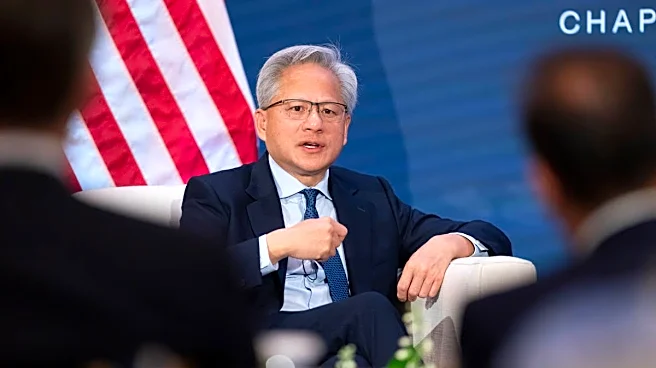

Jensen Huang: The Long-Term Visionary
While Zuckerberg mastered the social graph, Jensen Huang, CEO of NVIDIA, played a different game entirely: betting on the future of computing itself. He transformed NVIDIA from a niche maker of gaming
graphics cards into the foundational engine of the AI revolution. The lesson here is patience and conviction. Huang made massive, multi-decade investments in technologies like accelerated computing when their markets didn't even exist yet. For founders inspired by a single-minded product focus, Huang’s career is a masterclass in building the underlying platform that makes a thousand other products possible, proving that sometimes the most powerful move is building the tools others will use to build the future.
Reed Hastings: The Culture-Obsessed Cannibal
If Facebook’s culture was about rapid growth, Netflix’s, under co-founder Reed Hastings, was about “talent density” and radical candor. Hastings is famous for two things: an influential culture deck that advocated for treating a company like a professional sports team, not a family, and a willingness to destroy his own successful business. He aggressively pivoted from the profitable DVD-by-mail service to nascent streaming technology, knowing it was the future. Then he did it again, shifting from licensing content to producing originals. The takeaway is that a strong, if demanding, culture can enable a company to make painful but necessary pivots before the market forces its hand.
Whitney Wolfe Herd: The Mission-Driven Disruptor
After co-founding Tinder, Whitney Wolfe Herd left and created Bumble, a dating app where women make the first move. Her story provides a crucial counter-narrative to the growth-at-all-costs mentality. Bumble wasn’t just a new feature; it was built on a distinct social mission: to change gender dynamics and create a kinder, more accountable online environment. Wolfe Herd proved that a strong, values-based brand could be a powerful competitive advantage in a crowded market. For founders who want their company to be not just successful but also a force for a specific kind of change, she demonstrates how to bake a mission directly into the core product.
Brian Chesky: The Design-Led Storyteller
Where other platforms focused on transactions, Airbnb co-founder and CEO Brian Chesky, an industrial designer by training, focused on experience and trust. The initial challenge of Airbnb wasn't just technical; it was social: convincing people to sleep in a stranger's home. Chesky solved this not just with code, but with design-led thinking, obsessing over every detail of the user journey to build a sense of belonging. He showed that a brand's story and its emotional appeal can be just as important as the underlying technology. The lesson for data-driven founders is that understanding human connection and designing for trust can unlock markets that pure technology cannot.
Palmer Luckey: The Controversial Reboot
Palmer Luckey's story runs almost parallel to Zuckerberg's, but with a sharp divergence. A young, self-taught prodigy, he created the Oculus Rift, which kicked off the modern VR revival before being sold to Facebook for $2 billion. After a controversial departure from Facebook, however, Luckey didn’t start another consumer app. He co-founded Anduril Industries, a defense technology company using AI and autonomous systems for military applications. Luckey's trajectory is a study in second acts and ideological pivots. It illustrates that a founder's talent and ambition can be reapplied to vastly different, and even more contentious, industries, challenging the idea that a founder's identity is tied to a single domain.