






The Seduction of 'Instant' AI
First, let's appreciate the trick. For years, the smartest AI assistants lived in the cloud. Your phone would record your command, send it to a massive data center hundreds of miles away, get an answer, and send it back. Even with fast internet, there
was always a slight delay. On-device AI, the star of the Pixel 11, changes the game. The processing happens right on the phone's chip, making features like real-time translation or having AI book an appointment for you feel seamless and immediate. This approach is faster, more reliable when you're offline, and widely promoted as more private because your personal data isn't constantly being sent to a server. It’s the difference between asking a question and getting an answer versus having a real conversation.
The Unseen Toll on Your Battery
Here’s the first, and most tangible, price: battery life. Running complex AI models is one of the most power-intensive tasks a phone can perform. Think of it like a car's engine. Cruising on the highway is efficient, but flooring it to get instant acceleration burns through fuel. Similarly, asking the AI to constantly analyze photos, transcribe speech, or anticipate your next move puts a heavy load on the processor. While Google’s custom Tensor G6 chip is designed specifically for AI and claims to be more energy-efficient than its predecessors, the laws of physics are hard to escape. The more you use these incredible, instant features, the faster you'll be reaching for a charger. It creates a direct tension between having the 'smartest' phone and having a phone that lasts all day.
A New Hardware Arms Race
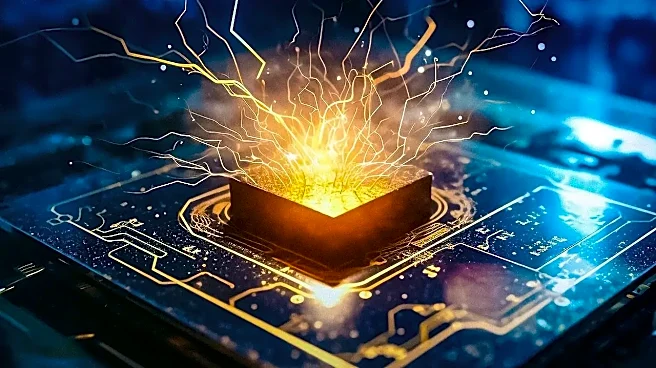
To make on-device AI possible without the phone melting in your hand, you need specialized hardware. This is why Google, like Apple, moved away from off-the-shelf chips from companies like Qualcomm and started designing its own Tensor processors. These chips aren't just about raw speed; they have dedicated components called Neural Processing Units (NPUs) built specifically to handle AI calculations efficiently. But this creates a new kind of hardware arms race. The research, development, and manufacturing of these custom chips are enormously expensive. That cost has to go somewhere, and it's often baked into the final price of the phone. While AI features may be marketed as 'free', you are, in a sense, paying an upfront hardware tax to enable them, which is one reason premium AI features are often exclusive to top-tier flagship phones.
The Storage and Subscription Creep
AI doesn't just consume power; it consumes space. The sophisticated AI models that enable these 'instant' features are essentially large files that need to be stored on your device. An advanced model for a single feature, like photo enhancement, can take up several gigabytes. As more features are added, the storage demand grows, potentially pushing consumers toward higher-capacity—and more expensive—phone models. Furthermore, the 'free' aspect of AI is becoming complicated. While some on-device tasks are included with the phone, Google and others are increasingly putting their most powerful AI capabilities behind subscription walls, like the Google One AI Premium plan. You buy the expensive hardware, and then you might have to pay a monthly fee to unlock its full potential, creating a two-tiered system of AI haves and have-nots.
The Hidden Environmental Price Tag
Finally, there's a cost that's completely invisible to the user: the environmental impact. The creation of these powerful AI models is an energy-intensive process. Training a single large AI model in a data center can consume as much electricity as hundreds of homes use in a year and require vast amounts of fresh water for cooling. One study estimated that training a large model can produce carbon emissions equivalent to multiple round-trip flights across the country. While on-device AI reduces the need for constant cloud communication, the initial development and training of the models that get loaded onto your Pixel 11 have a significant carbon and water footprint before the phone ever reaches your pocket.