








The Picks and Shovels of a Digital Gold Rush
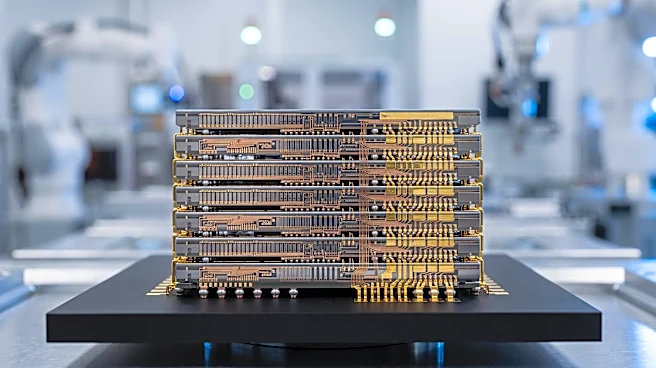
To understand the AI boom, you have to understand Nvidia. The company doesn't create the AI models that capture headlines; instead, it designs and sells the specialized hardware—Graphics Processing Units, or GPUs—that make them possible. Think of it as
selling the picks and shovels during a gold rush. Every major tech company and countless startups rely on Nvidia's powerful chips to train and run their AI systems, turning the company into an infrastructure powerhouse. This dominance has led to staggering growth, with revenues rocketing upwards and its market valuation hitting trillions. The company has become so central that it now acts as a major venture capital investor, financing the very customers who buy its chips, effectively accelerating the entire AI ecosystem.
The Promise: New Frontiers of Productivity and Growth
The excitement surrounding this boom is palpable, and for good reason. Proponents, including Nvidia's own leadership, argue that AI is a massive engine for job creation and economic growth. The World Economic Forum projected that while AI will displace millions of jobs, it will create even more—a net gain globally. Entirely new roles, like 'AI agent builders' and 'prompt engineers', are emerging, and workers with AI-specific skills are commanding significant wage premiums. Beyond direct tech jobs, AI is transforming industries from healthcare to manufacturing, creating efficiencies and opening up new possibilities. In fields like radiology, AI assistance has led to more productivity, allowing professionals to handle more cases and focus on patient care, contrary to early predictions of job loss. This perspective sees AI as a tool that augments human capability, freeing people from tedious tasks to focus on creativity and strategy.
The Anxiety: A Creeping Fear of Obsolescence
For every optimistic projection, there is a corresponding wave of anxiety. A significant portion of the American workforce is worried about AI's impact on their job security. This isn't just a vague fear; it's a documented psychological trend that therapists are seeing more frequently in their practices. The anxiety stems from the potential for AI to automate cognitive tasks once thought to be exclusively human, affecting not just routine data entry but also creative and analytical white-collar roles. Some data shows a slowdown in hiring for entry-level positions in AI-exposed fields, suggesting companies are using technology to fill gaps previously occupied by recent graduates. While widespread, AI-driven mass layoffs haven't materialized in the way some feared, the disruption is real, manifesting in deferred hiring and a restructuring of what skills are valued.
Navigating the Great Restructuring
Ultimately, the Nvidia-powered AI boom represents more than just the rise of a single company; it's a fundamental restructuring of the labor market. The conversation is shifting from a simple 'jobs created vs. jobs lost' debate to a more nuanced understanding of job transformation. Studies suggest over half of U.S. jobs will be reshaped by AI in the coming years, meaning roles will change dramatically even if they aren't eliminated. The challenge for workers is adapting to this new reality, which often requires significant upskilling. The market is splitting into those who can leverage AI and those whose roles are threatened by it. This raises critical questions about inequality, the concentration of power in a few tech giants, and the need for government and corporate strategies to manage this transition responsibly.