





The Speed Trap Most People Fall Into
When you ask for internet advice for a boat, the conversation almost always defaults to one metric: download speed. How many megabits per second (Mbps) can you get? It’s the same way we talk about home internet, and it seems logical. An engineer might
recommend a satellite service like Starlink because it offers incredible speeds of 100-200 Mbps, making it feel just like home broadband. They’ll compare it to older, slower satellite options like VSAT or the limits of cellular data. The focus is on that big, impressive number. It’s an easy selling point and a simple benchmark. But a boat is not a house. It pitches, it rolls, it moves from one coverage area to another, and it’s surrounded by water. Focusing only on peak speed is the biggest, and most common, mistake a boat owner can make.
The Hidden Detail: It's All About the Handoff
Here’s the secret: for a boat, reliability isn't about speed; it's about seamless handoffs. Whether you’re using cellular or a Low Earth Orbit (LEO) satellite service like Starlink, your boat is constantly moving between coverage zones. With cellular, you’re passing from one tower’s range to the next. With LEO satellites, the satellites themselves are moving rapidly overhead, and your dish must switch connections from one to another. Each of these switches is a “handoff,” and it’s a moment where the connection can briefly drop. These micro-outages are the real enemy of stable internet at sea. The hidden detail that even engineers sometimes gloss over is how a system manages these transitions. Is it a hard drop that interrupts your video call, or is it a seamless transition you never notice? That single factor is more important than raw speed.
Why Redundancy Is the Real Answer
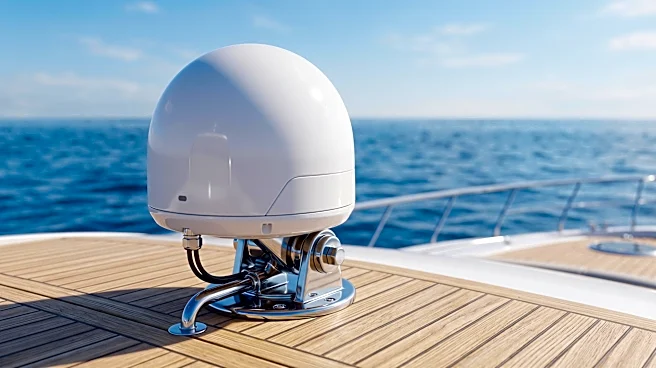
So, how do you solve the handoff problem? The answer is redundancy. Instead of relying on a single connection, the most robust marine internet setups use multiple sources at once—a practice known as bonding. Imagine you have both a Starlink satellite connection and a 5G cellular connection active simultaneously. Specialized routers and software can bond these two signals into a single, more reliable pipeline. When your Starlink dish is momentarily obstructed by the boat’s mast or is switching between satellites, the cellular connection instantly picks up the slack. When you cruise too far offshore for cellular to work, the satellite takes over completely. This hybrid approach smooths over the gaps, effectively eliminating those frustrating micro-drops. It creates a connection that is resilient to movement, weather, and the unique challenges of the marine environment.
The Questions You Should Be Asking
Armed with this knowledge, you can now have a much smarter conversation with any installer or provider. Instead of just asking, “How fast is it?” start with these questions: How does the system handle handoffs between satellites or cell towers while the boat is in motion? Does this recommendation include a hybrid or bonded solution for redundancy? What is the typical latency, not just the download speed? (Low latency is crucial for real-time applications like video calls). Can you show me a setup that bonds satellite and cellular service for near-shore and offshore reliability? Asking about failover logic and redundancy will instantly signal that you understand the real-world challenges of marine connectivity. You're no longer focused on a single, often misleading, number. You're focused on what actually matters: uninterrupted service.