




The ‘It Just Works’ Playbook
Apple’s greatest strength has never been inventing a category first, but perfecting it by hiding the complexity. The iPod wasn’t the first MP3 player, but it was the first one that made managing 1,000 songs feel effortless. The iPhone wasn’t the first smartphone,
but it replaced a clunky stylus and a confusing OS with a simple, intuitive touch interface. Apple is applying this exact playbook to artificial intelligence. While competitors are asking you to learn how to 'prompt' a chatbot, Apple is integrating AI so deeply into the operating system that you may not even realize you’re using it. Think of the new 'Apple Intelligence' features: summarizing notifications, cleaning up photos, or finding a specific detail in an email. These aren't flashy, standalone AI 'apps.' They are subtle enhancements to tasks you already perform. The goal isn't to make you consciously 'use AI'; it’s to make your device feel smarter, faster, and more helpful. By 2026, this ambient, invisible assistance could be so ingrained in the user experience that it feels like magic—the classic Apple calling card.
Privacy as a Strategic Moat
The most powerful AI is deeply personal. It knows your schedule, understands your relationships from your messages, and can access your photos. For most companies, this presents a massive privacy hurdle. Google and Microsoft are primarily cloud-based, meaning your data often has to travel to their servers for processing, creating understandable user anxiety. Apple’s countermove is a masterstroke of strategy. By prioritizing on-device processing for most AI tasks, it keeps your personal data on your phone. For more complex queries, it created 'Private Cloud Compute,' a system designed to process data without Apple ever having access to it. This isn't just a marketing slogan; it's a foundational advantage. This trust allows Apple to build AI that is contextually aware in a way competitors can't easily match. It can suggest a meeting time because it saw an email, knows your travel schedule from your calendar, and can check traffic—all without you feeling like you’re feeding your life into a corporate server. This privacy-first architecture is the key that unlocks truly personal, 'invisible' AI.
Moving Beyond the Chatbot
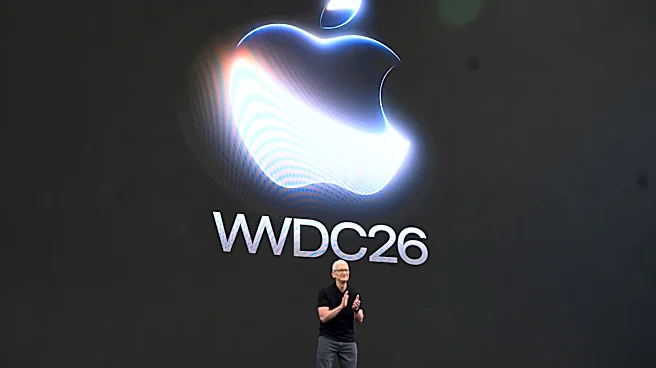
The current AI hype cycle is defined by the chatbot. We go to a specific window, type a question, and get an answer. It's a powerful tool, but it's also a destination. Apple is betting that the future of consumer AI isn't a destination, but a utility woven into the fabric of everything you do. Instead of opening an app to ask it to 'make this email more professional,' Apple’s tools will just be there, a button inside the Mail app itself. Instead of describing a photo you want to find, the Photos app will just understand your natural language search. This is a fundamental difference in user-experience philosophy. While competitors are trying to build the smartest oracle, Apple is trying to build the most helpful assistant—one that anticipates your needs without you having to ask. It's a less spectacular demo, but in day-to-day use, it’s potentially far more valuable. By WWDC 2026, the market may realize that the most useful AI isn't the one you talk to, but the one that makes every app you already use work better.
The Ultimate Ecosystem Lock-In
For years, the seamless integration between iPhone, Mac, iPad, and Apple Watch—known as the 'walled garden'—has been Apple's most potent competitive advantage. Invisible AI is poised to make those walls ten feet higher. Imagine your Mac summarizing a long document, and that summary is instantly available to your iPhone to reference in a text message. Or your Apple Watch quietly learns your workout patterns and proactively suggests adjustments to your routine, which then sync with your Health app. When AI is ambient and context-aware across all your devices, the ecosystem stops being a collection of gadgets and becomes a single, cohesive intelligent system. The convenience of this deep integration will be incredibly difficult for competitors to replicate. Google’s AI may be powerful on an Android phone, but can it seamlessly work with a Windows PC and a Samsung watch in the same intuitive, private way? Apple is betting it can't. This integrated intelligence is the ultimate form of lock-in, making the Apple ecosystem not just convenient, but indispensable.