






The Allure of Simplicity
For home users and many small businesses, mesh systems are a revelation. Instead of a single, overburdene d router, you get a team of nodes that work together to spread the signal. Setup is often as simple as plugging them in and following an app. This
'plug-and-play' appeal is the primary reason for their explosion in popularity. For environments where running Ethernet cables is impractical or too expensive, mesh offers a quick and effective way to eliminate dead zones and provide wall-to-wall coverage. The argument from the pro-mesh side is clear: it solves the most common WiFi problem—coverage—with unmatched ease of use. This convenience is a powerful feature, not a bug.
The Case for Control and Wires
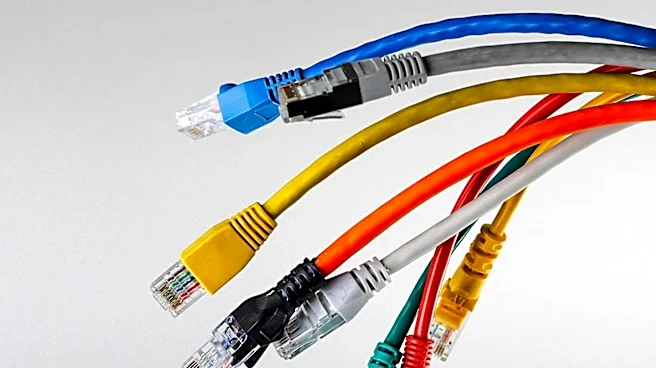
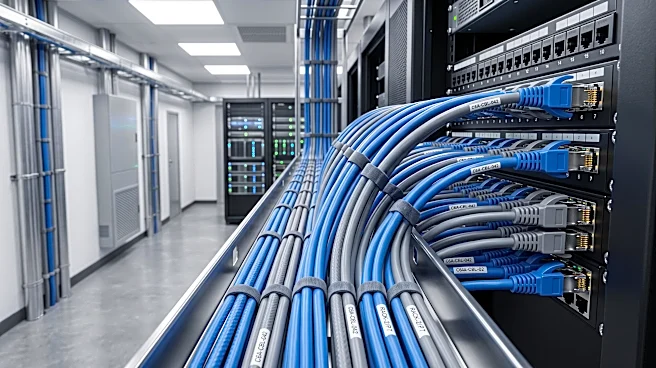
Many senior engineers, particularly those from enterprise backgrounds, view mesh with deep skepticism. Their world is built on predictability, performance, and control—three areas where they argue wireless mesh falls short. They champion the traditional architecture of dedicated access points (APs), each connected to the network with a physical Ethernet cable. This 'wired backhaul' guarantees that each AP has a fast, stable connection to the network backbone, free from the wireless interference that can plague mesh systems. It also allows for granular control over the network, from managing radio channels to prioritizing traffic for critical applications like video calls or VoIP, something consumer-grade mesh systems often lack.
The Performance and Latency Debate
The core of the technical disagreement boils down to the 'backhaul'—how the mesh nodes talk to each other. In many consumer systems, the nodes use the same wireless bands to communicate with each other as they do to connect to your devices. Engineers point out that each 'hop' a signal makes from one wireless node to another can effectively cut the available bandwidth in half and significantly increase latency, or lag. While this might be unnoticeable when browsing the web, it can be disastrous for gaming, high-resolution streaming, or time-sensitive business applications. While newer, more expensive tri-band and quad-band mesh systems mitigate this by using a dedicated wireless band for backhaul, skeptics argue it’s still no match for the reliability of a physical wire.
The Scalability and Management Problem
While adding a new mesh node seems easy, scaling a wireless mesh network for high-density environments like a busy office or a public venue presents a major challenge. As more nodes and devices compete for the same wireless airtime, the network can become congested and unstable. Diagnosing bottlenecks or rogue 'sticky' clients that refuse to roam to a better node can become a management nightmare. In contrast, a professionally planned system of wired APs is designed to handle hundreds of concurrent users by carefully managing radio frequencies and load distribution. The disagreement, therefore, is also about the definition of 'scalability'. For a home, adding a node is scaling. For an enterprise, scaling means maintaining performance as density increases, which engineers argue is a key weakness of wireless mesh.