









The Digital Wild West
Imagine a world before email was 'email'. In the late 1970s, the ARPANET—the internet's ancestor—was a chaotic landscape of competing ideas. Different universities and research labs had their own systems for sending messages. There was no single, agreed-upon
way to format a message, handle a reply, or even write an address. Sending a message from one system to another was often a technical nightmare, a tower of Babel built from incompatible code. The community knew it needed a universal translator, a single standard to make communication seamless. This need gave birth to the effort to codify the rules, a process that would culminate in a foundational document for the internet.
A Battle of Commas and Colons
The creation of RFC 822, led by network engineer David Crocker, was less a top-down decree and more a negotiation between brilliant, competing minds. The debates, conducted over the very email systems they were trying to standardize, were intense. One of the biggest fights was over something that seems trivial now: syntax. How should a machine read an address? How do you separate the sender's name from their actual address? Should a person's name be in quotes, parentheses, or separated by a comma? One camp prioritized human readability, arguing that the formats should be intuitive and flexible. The other prioritized strict, machine-parsable rules, which would make software simpler but the format less forgiving. The tension between these two philosophies defined the entire process. For example, the standard had to decide if "Jane Doe
The Pragmatic Compromise
David Crocker's role was to find a path through these competing visions. The resulting standard, RFC 822, was a masterpiece of pragmatism. It wasn't the strictest possible format, nor was it the most flexible. It was a compromise designed for the real world. It introduced the now-familiar structure of header fields like "From:", "To:", and "Subject:", followed by a body. Crucially, it allowed for both structured fields (like dates and addresses) and unstructured ones (like the subject line), blending machine-friendliness with human expression. It even included provisions for features that weren't widely used, anticipating future needs. The document itself noted that some features from its predecessor, RFC 733, were removed because they failed to gain acceptance, showing a willingness to adapt based on what people were actually doing.
The Road Not Traveled
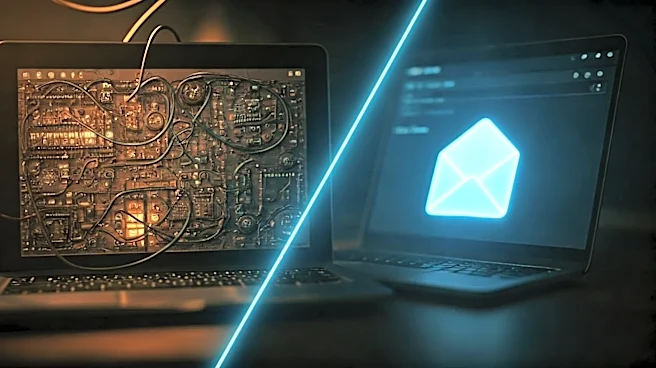
So what would email look like if a different path had been taken? Had the purists won, we might have had a system so rigid that it couldn't adapt. Email addresses might have been strictly limited, with no allowance for comments or descriptive names—just the raw `user@host` format. We might not have had the flexibility that later allowed for things like MIME attachments for images and files, which were built on top of RFC 822's foundation. Conversely, if the human-readability camp had completely won, we might have had a system so loose that spam filtering and automated mail sorting would be nearly impossible. The lack of strict rules would have made it a nightmare for developers to write reliable email clients. The success of RFC 822 was in finding the middle ground that was 'good enough' to work reliably but flexible enough to evolve.