







An Unlikely Innovation Lab
Before smart speakers started playing music and smart refrigerators offered to order milk, appliance makers faced a challenge: how to introduce a skeptical public to the idea of connected devices? The answer, it turned out, was the laundry room. It was a perfect,
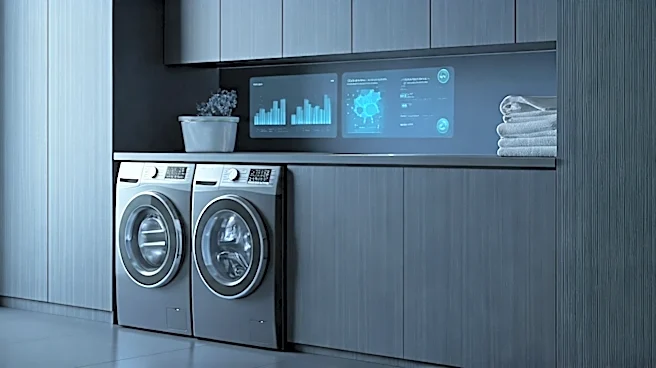
low-stakes environment. Unlike a glitchy smart oven that could ruin dinner, a washing machine that sent a faulty notification was an annoyance, not a catastrophe. The tasks were predictable—wash, dry, repeat—and the user problems were clear. People forgot clothes in the washer, leading to musty smells, or ran the dryer multiple times, wasting energy. The first wave of smart laundry appliances in the 2000s and early 2010s addressed this with a simple but revolutionary feature: a Wi-Fi connection that could send a “cycle finished” notification to your phone. It seems trivial now, but this was a foundational step in training consumers to interact with their homes through an app.
Beyond the Notification Ping
Once connectivity was established, the real innovation began. Manufacturers started embedding sophisticated sensors into their machines. These weren’t just for show; they solved real problems. Advanced sensors could detect the weight of a load, the type of fabric, and even the soil level of the clothes. The machine would then use this data to automatically adjust water levels, cycle times, and energy consumption. This was a radical shift from the manual dials of the past. Perhaps the most influential of these features was auto-dosing. Systems like Whirlpool's "Load & Go" and Bosch's "i-DOS" store detergent for multiple loads, using sensors to dispense the precise amount needed for each wash. This not only improved cleaning performance and protected clothes but also introduced a powerful new concept: an appliance that manages its own consumables.
The Ripple Effect on All Hardware
The principles tested in the laundry room soon echoed across the entire consumer hardware industry. The idea of an appliance managing its own supplies, pioneered by auto-dosing washers, is the direct ancestor of smart refrigerators that track inventory and printers that automatically re-order ink cartridges. The sensor-driven optimization of a wash cycle laid the groundwork for smart thermostats that learn your schedule and smart lighting that adjusts to the time of day. Furthermore, remote diagnostics, first used to help service technicians troubleshoot a complex washing machine, became a standard feature in everything from high-end cars to home security systems. The washer that could download new, specialized cycles via a software update was a precursor to the Tesla that gets new features overnight. The laundry room proved that a “dumb” object could become a dynamic, evolving product long after it left the factory floor.
Training Us for the Future
Ultimately, the quiet revolution in the laundry room wasn't just about the technology itself—it was about changing consumer behavior and expectations. Smart washers and dryers taught us to trust an appliance to make its own decisions. They accustomed us to the idea of a product getting better over time with software updates. They normalized the relationship between a physical device and its digital, app-based twin. By starting with a mundane, low-risk chore, manufacturers successfully introduced the core concepts of the Internet of Things into our homes. Every time a smart speaker understands a command or a coffee maker knows your favorite brew, we are seeing the legacy of those early, connected washing machines that did little more than tell us the towels were finally ready for the dryer.