




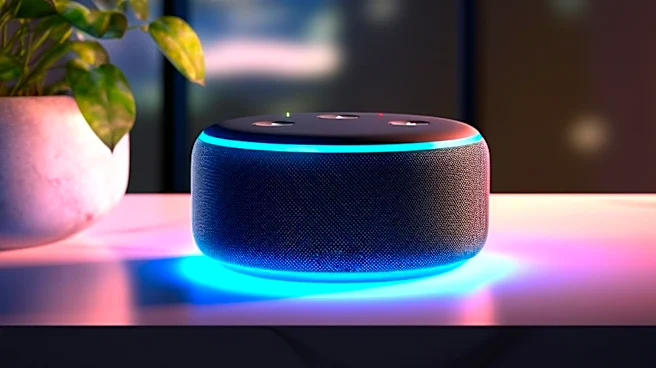


More Than Just Words
At the most basic level, AI assistants like Siri, Alexa, and Google Assistant work by turning your spoken words into text and then figuring out your intent, a process called Natural Language Processing (NLP). Every time you ask a question, set a reminder,
or request a song, that interaction is recorded and analyzed. This explicit data is the foundation of their learning process. They remember your music tastes, your common questions, and your frequent contacts. Over time, this allows the assistant to become more personalized, anticipating your needs and responding more accurately to your unique accent and phrasing. This is the surface level—the data you knowingly provide with every interaction. But the real insights come from the patterns this data reveals when analyzed together.
Your Unspoken Schedule and Relationships
Your daily habits create a predictable rhythm that AI is designed to recognize. Your morning alarm, followed by a request for the day's weather and traffic, tells the assistant when you wake up and whether you commute. The command to “turn off the living room lights” at the same time each night reveals your bedtime. These patterns build a detailed schedule without you ever having to input a calendar entry. It knows when you’re likely home and when you’re away. The same logic applies to your relationships. By analyzing who you call, text, or ask the assistant to message most often, the AI can infer your social circle and even the hierarchy within it—distinguishing close family from casual acquaintances based purely on frequency and time of day.
A Window into Your Health and Wellness
AI assistants are increasingly becoming hubs for health and wellness information. Connecting your assistant to a fitness tracker or smart scale provides direct access to your activity levels, sleep patterns, and other biometric data. But even without direct integrations, your queries alone can create a detailed health profile. Asking for low-calorie recipes, information about allergy symptoms, or the nearest 24-hour pharmacy can be collected as data points. Over time, these queries can paint a picture of your dietary habits, fitness goals, and potential health concerns, creating a sensitive dataset you may not have intended to share.
Are You Happy, Sad, or Stressed?
One of the more advanced frontiers for AI is emotion detection. The technology is no longer limited to just understanding the words you say; it can analyze how you say them. By examining vocal biomarkers like pitch, tone, and pace, some AI systems can infer your emotional state. A higher pitch and faster pace might indicate excitement or stress, while a slower, lower-toned voice could suggest sadness or fatigue. This is known as voice sentiment analysis. While your home assistant may not be sending you a notification every time you sound stressed, this capability is being actively developed and used in other areas, like customer service bots that aim to detect a caller's frustration. The ability to read your mood from your voice adds a powerful—and deeply personal—layer of data to your profile.
The Ultimate Consumer Profile
Ultimately, the vast majority of data collected by AI assistants is used to build a sophisticated consumer profile for targeted advertising and product recommendations. Asking your assistant to add an item to your shopping list, research a product, or order something directly are strong signals of purchasing intent. These signals are incredibly valuable. When combined with all the other inferred data—your schedule, your interests, your location, and even your mood—it allows companies to predict what you might buy next. This is why when you casually mention needing new running shoes, you might start seeing ads for them across your devices. The AI connects your spoken desire to a powerful advertising apparatus, turning a simple voice command into a commercial opportunity.