





When TikTok’s CEO testifies before Congress, the face you see isn’t an accident. It’s the product of a single, pivotal decision made by its Chinese parent company, ByteDance, to build a global leadership team that could win over the West.
The Decision to Build a Geopolitical Firewall
As TikTok exploded
in popularity across the U.S., its Beijing-based parent company, ByteDance, faced a monumental challenge. Lawmakers and regulators were deeply suspicious of an app with Chinese ownership having access to the data and attention of millions of Americans. The solution was a calculated corporate strategy: create a visible, international leadership team to act as a geopolitical firewall. The plan was to appoint executives who looked, sounded, and thought like Western business leaders, deliberately distancing TikTok from its Chinese roots in the public eye. This wasn't just about hiring for talent; it was about hiring for perception. The goal was to present TikTok as a global company, headquartered in places like Singapore and Los Angeles, not Beijing, even if the underlying ownership structure remained.
The Singaporean CEO and His American Team
The public face of this strategy is Shou Zi Chew, a Singaporean executive appointed CEO in 2021. His resume seemed tailor-made for the job: a Harvard Business School education, an internship at a pre-IPO Facebook, and a background in finance at Goldman Sachs and as CFO for Chinese tech giant Xiaomi. Fluent in both English and Mandarin, Chew could navigate both Western and Chinese business worlds. ByteDance founder Zhang Yiming didn't just pick a CEO; he picked a diplomat. Chew was supported by a cadre of American and international executives, like former COO Vanessa Pappas, a YouTube veteran who was instrumental in tailoring TikTok for U.S. consumers and managing its creator community. In Washington, the company hired Michael Beckerman, a former congressional staffer and president of the Internet Association, to lead its public policy and lobbying efforts. Each hire was a strategic placement designed to build trust and legitimacy in its most important and most precarious market.
The Strategy Under Fire in Congress
This carefully constructed executive firewall was put to the ultimate test in front of the U.S. Congress. During hours of grueling testimony, lawmakers from both parties relentlessly grilled Chew, attempting to pierce the corporate veil. They questioned the sincerity of 'Project Texas,' a $1.5 billion plan to store U.S. user data on American soil managed by U.S. personnel. Lawmakers repeatedly framed Chew not as the head of a global tech company, but as a proxy for ByteDance and, by extension, the Chinese government. Despite his calm demeanor and repeated assurances that ByteDance is not an agent of China, the committee appeared largely unconvinced. The hearings revealed the limits of the strategy: while the faces were international, the ownership was not, and for many in Washington, that was the only fact that mattered.
An Inevitable Outcome?
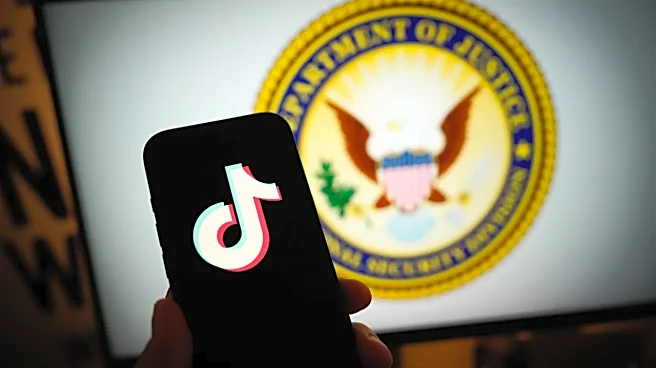
In 2024, Congress passed the Protecting Americans from Foreign Adversary Controlled Applications Act (PAFACA), giving ByteDance an ultimatum: sell TikTok's U.S. operations or face a nationwide ban. After a brief, voluntary shutdown and a series of executive orders extending the deadline under a new administration, a deal was finally reached in January 2026 to form a new joint venture, TikTok USDS, with major investment from U.S. companies. The very executives hired to prevent this outcome were ultimately unable to stop it. While the leadership team successfully built TikTok into a cultural and commercial powerhouse with over 200 million American users, their global credentials couldn't overcome the foundational issue of its Chinese ownership in a time of heightened geopolitical tension. The story serves as a case study in the modern global economy, where corporate strategy, no matter how clever, can be overridden by national security politics.