









The Disposable Rocket Problem
Imagine building a brand-new Boeing 747, flying it from New York to London, and then ditching it in the Atlantic. That’s essentially how the space launch industry worked for over 50 years. The most expensive part of any rocket, the first-stage booster
with its complex engines and fuel tanks, was treated as disposable hardware. Companies like Boeing and Lockheed Martin, operating as the United Launch Alliance (ULA), and Europe's Arianespace built exquisitely engineered, single-use machines for their government and commercial clients. The cost was astronomical, with a single launch often exceeding $150 million, and sometimes multiples of that. This model was baked into the economics of the industry. Government contracts, especially for national security launches, prioritized reliability above all else, with little incentive to radically innovate on cost. The system worked, but it created an impenetrable barrier to a truly commercial and accessible space economy.
The Billion-Dollar 'What If?'
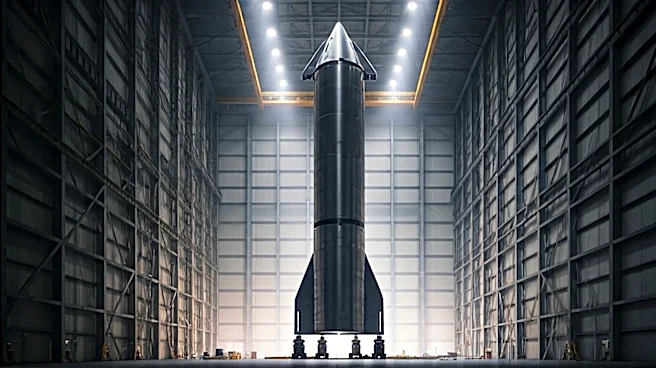
Elon Musk and SpaceX looked at this paradigm and saw not an engineering necessity, but a colossal market failure. The bet was this: what if you could land the rocket’s first stage and fly it again? This wasn't a new concept—NASA had tinkered with similar ideas during the Space Shuttle era—but no one had been willing to stake their company's future on it. SpaceX poured over a billion dollars and nearly a decade of work into making it a reality. The challenge was immense. It required teaching a 14-story-tall booster to reorient itself in space, survive a fiery reentry at hypersonic speeds, reignite its engines to slow down, and land itself upright on a tiny drone ship bobbing in the ocean. Early attempts were a series of spectacular, fiery explosions. To outsiders and competitors, it looked like a fool's errand, an expensive distraction from the core business of simply getting payloads to orbit reliably. The company was betting everything on mastering a feat many seasoned engineers considered a wasteful fantasy.
Why Legacy Players Balked
So if the idea was so powerful, why did nobody else do it? For established aerospace giants, the risk-reward calculation was completely different. First, their business model was secure. They were sustained by lucrative, long-term government contracts where cost-plus pricing meant there was no real pressure to lower expenses. Drastically cutting launch costs would mean cannibalizing their own revenue streams. Second, as publicly traded companies, they answered to shareholders who demanded predictable quarterly returns. Sinking billions into a high-risk R&D project with a decade-long timeline and no guarantee of success would have been corporate malpractice in their view. The corporate culture of these legacy firms was built around minimizing risk, not embracing it. SpaceX, as a private company driven by a singular, obsessive founder, had the freedom to fail repeatedly and operate on a timeline that would be unacceptable in a traditional corporate environment. They could afford to play the long game.
The Payoff That Changed the Sky
When the Falcon 9 booster successfully landed on the drone ship *Of Course I Still Love You* in 2016, it wasn't just a technical victory; it was the sound of an entire industry being upended. The bet paid off spectacularly. By reusing its most expensive components, SpaceX was able to slash the price of a launch to around $60 million, a fraction of what its competitors charged. This didn't just win them market share; it created new markets. Suddenly, launching large constellations of satellites became economically viable, paving the way for SpaceX's own Starlink internet service. The company began launching rockets at a cadence previously unimaginable, sometimes multiple times a week. Competitors who had once dismissed reusability as a gimmick are now scrambling to develop their own reusable systems, but they are years, if not a decade, behind. SpaceX didn't just build a better rocket; it rewrote the fundamental economics of accessing space.