






The Lavender Fields of Provence, France
Imagine endless rolling hills cloaked in fragrant, deep purple. From late June to early August, the Provence region of France transforms into a sensory masterpiece. The most famous area, the Valensole Plateau, offers a sea of lavender that buzzes with
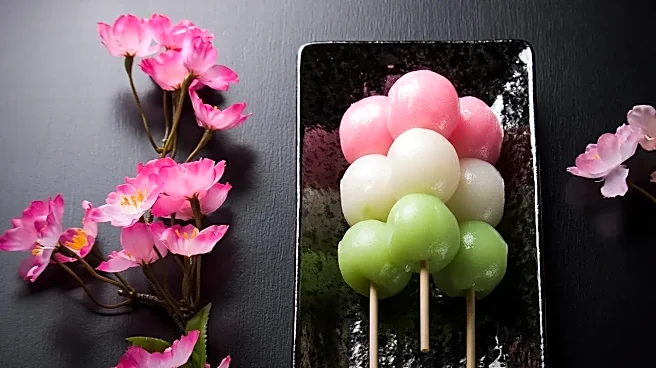
bees and the activity of local distilleries. Unlike the gentle pinks of sakura, this experience is rich, aromatic, and intense. The peak bloom generally occurs in early to mid-July, when villages like Valensole and Sault host lively festivals celebrating the harvest of this "blue gold." It's an opportunity to drive the famous lavender routes, explore charming hilltop towns, and immerse yourself in a landscape that has inspired artists for centuries.
The Tulip Fields of the Netherlands
If hanami is about delicate canopies, the Dutch tulip season is about bold, graphic carpets of color. For about eight weeks each spring, typically from mid-March to mid-May, the region between Haarlem and Leiden, known as the Bollenstreek (Bulb Region), erupts in vibrant, geometric rows of tulips. The heart of it all is Keukenhof, one of the world's largest flower gardens, where over seven million bulbs are planted annually. While Keukenhof is a curated park experience, renting a bike and cycling through the surrounding commercial fields offers a different kind of immersion, with endless stripes of red, yellow, and pink stretching to the horizon. It's a joyful, man-made spectacle that rivals nature's own.
The Lupin Fields of New Zealand
On the South Island of New Zealand, a different kind of floral magic happens from late November to early January. Along the shores of the stunningly turquoise Lake Tekapo and throughout the Mackenzie Basin, invasive but undeniably beautiful Russell lupins bloom in dramatic spires of pink, purple, blue, and yellow. Set against the backdrop of the Southern Alps, the scene is breathtakingly wild and rugged. While the cherry blossom experience is often tranquil and contemplative, viewing the lupins is an adventure. The best time to see them is typically from mid-November to early December. Road-tripping through this epic landscape as it’s painted in vivid, towering flowers is an unforgettable experience.
The California Superbloom
Perhaps the most unpredictable and wild alternative to hanami is the California superbloom. This rare phenomenon occurs after a wet winter follows several dry years, causing millions of dormant wildflower seeds to germinate at once. When conditions align, typically between February and May, desert landscapes like Anza-Borrego Desert State Park and Carrizo Plain National Monument are transformed into vast carpets of orange poppies, purple verbena, and yellow sunflowers. Predicting a superbloom is notoriously difficult, making it a bucket-list chase for nature lovers. It's a powerful and ephemeral display of nature's resilience, turning arid, stark landscapes into a vibrant explosion of life for just a few precious weeks.
Australia's Floriade Festival in Canberra
For a Southern Hemisphere spring, look no further than Floriade, Australia's biggest celebration of flowers. Held annually from mid-September to mid-October in Canberra's Commonwealth Park, this month-long festival features over a million blooms. What started as a one-time celebration in 1988 has grown into a massive event with intricate garden bed designs, sculptures, live music, and workshops. Unlike the more naturalistic settings of other floral seasons, Floriade is a curated, festival-like atmosphere. It even features an after-dark extravaganza called NightFest, where the garden beds are illuminated with creative light installations, giving the blooms a second life. It’s a community-focused celebration of spring's arrival.