





The Dream of an 'Intergalactic Network'
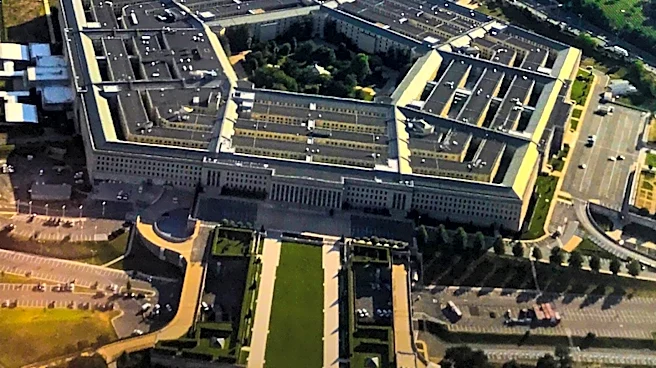
The story begins not with a blueprint, but with a vision. In the early 1960s, a psychologist and computer scientist named J.C.R. Licklider was the director of an office at the Pentagon's Advanced Research Projects Agency (ARPA). At a time when computers
were seen as giant, room-sized calculators for complex math, Licklider saw them as something more: communication devices. In a 1963 memo, he outlined a concept he playfully called the 'Intergalactic Computer Network'. His idea was to connect researchers across the country, allowing them to share data, programs, and messages seamlessly. This was a radical notion when most computer systems were isolated, incompatible, and could only be used by one person at a time via stacks of punch cards. Licklider, known for his kindness and ability to inspire, wasn't a nuts-and-bolts engineer; he was a visionary who planted the seed for what would become ARPANET, the precursor to the modern internet.
The Man with Three Annoying Terminals
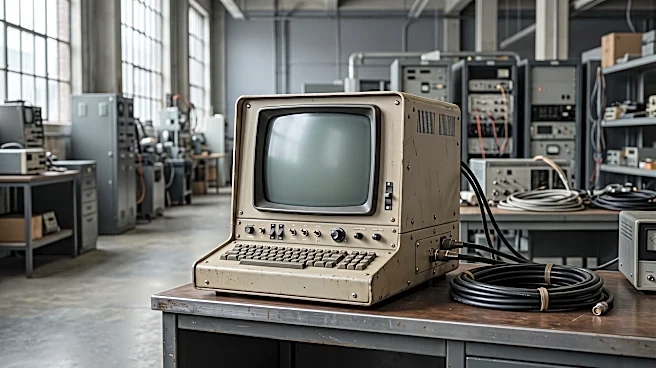
The person who turned Licklider's dream into a funded project was Robert 'Bob' Taylor. In 1966, Taylor took over as director of ARPA's Information Processing Techniques Office (IPTO). In his Pentagon office, he had three separate teletype terminals, each connected to a different ARPA-funded supercomputer in different parts of the country. To communicate with the research community at MIT, he had to use one terminal; to connect with Berkeley, another; and for a project in Santa Monica, the third. It struck him as absurdly inefficient. Why couldn't these taxpayer-funded machines talk to each other? Frustrated by this digital triple-booking, Taylor went to his boss, ARPA Director Charles Herzfeld, and in a 20-minute meeting, secured a million dollars to build a network that would connect them all. The practical annoyance of one manager became the catalyst for the entire project.
The Hidden Decision: Collaboration Over Contracts
This is where the pivotal, 'hidden' decision was made. The standard way for the Department of Defense to execute a major project was to hire a single, large aerospace or tech contractor to build the entire system from the top down. But Taylor, inheriting Licklider’s philosophy, chose a different path. Instead of a rigid, centralized hierarchy, he decided to create a decentralized, collaborative network of the very same academic researchers he was funding. The project wouldn't be handed off to a single corporate giant; it would be built by a loose confederation of graduate students and professors at universities like UCLA, Stanford Research Institute (SRI), UC Santa Barbara, and the University of Utah. This managerial choice to favor a cooperative, academic model over a traditional military-industrial one was the project's secret weapon. It fostered an environment of open debate, shared problem-solving, and a kind of intellectual chaos that was perfect for tackling a problem no one had ever solved before.
Recruiting the 'Wizards'
This decentralized approach directly influenced who was chosen to build it. To manage the technical aspects, Taylor recruited a reluctant but brilliant MIT researcher named Larry Roberts. Roberts, often called the 'father of the ARPANET,' was tasked with designing the network's architecture. But the actual work of writing the protocols—the fundamental language the computers would use to speak to each other—was largely done by a collection of graduate students known as the Network Working Group. Led by Steve Crocker, this group of 'wizards' operated with remarkable openness, publishing their notes in a series of informal documents called Requests for Comments (RFCs) that anyone could read and critique. This culture of open standards and peer review, born from Taylor's decision to trust the academic community, became a defining characteristic of internet development for decades to come.