







It’s Not a Language, It's an Ecosystem
The first mistake people make is comparing MATLAB directly to Python. That's like comparing a fully-equipped professional kitchen to a single, high-quality chef's knife. Python is a general-purpose language with an incredible, yet sprawling and sometimes fragmented, ecosystem of libraries like NumPy and SciPy that you have to assemble yourself. MATLAB, on the other hand, is a vertically integrated environment. It’s the language, the editor, the debugger, the data visualizer, and a vast library of pre-built, rigorously tested 'toolboxes' all in one polished, supported package from one company: MathWorks. For an engineer on a deadline, the guarantee that every part of the system works together seamlessly is worth a premium. You're not just buying
a language; you're buying a solution.
The Killer App: Simulink
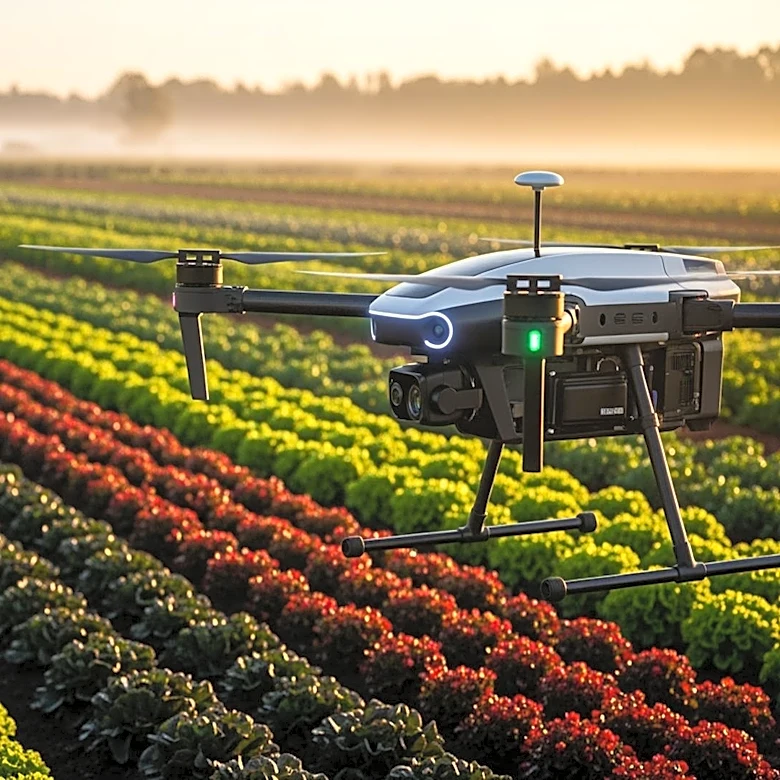
If there's one 'real reason' that stands above the rest, it’s Simulink. This is MATLAB’s secret weapon and the part of the ecosystem that has no direct, industry-standard equivalent in the Python world. Simulink is a graphical, block-diagram-based environment for modeling, simulating, and analyzing multi-domain dynamic systems. Think about designing the control system for a car's anti-lock brakes, the flight controls of a drone, or the power management of a satellite. Engineers can visually build and test these complex systems in Simulink before writing a single line of hardware code. In industries like automotive, aerospace, and industrial automation, Simulink isn’t just a tool; it's the bedrock of the entire development process. To unseat MATLAB in these fields, you'd first have to build a viable competitor to Simulink, and nobody has come close.
The Fortress of Academia
Every year, a new cohort of engineers and scientists graduates from universities around the world. And for decades, a huge number of them learned their core computational skills using MATLAB. It's deeply embedded in the curriculum for mechanical, electrical, and chemical engineering, as well as physics and applied mathematics. Textbooks are written with MATLAB examples. Problem sets are designed to be solved in MATLAB. This creates a powerful, self-perpetuating cycle. When these graduates enter the workforce, MATLAB is the tool they know best. They bring that preference to their employers, who in turn are happy to hire graduates who can be productive from day one. This institutional inertia is a massive competitive advantage that's incredibly difficult for any competitor to overcome.
The Prohibitive Cost of Change
For a large corporation—say, a major automaker or a defense contractor—the decision to stick with MATLAB isn't just about preference; it's about risk and money. These companies have decades of validated code, complex models, and simulation data built in the MATLAB/Simulink ecosystem. This intellectual property is worth billions. Migrating it all to a new platform like Python would be an astronomical undertaking. It would require retraining thousands of engineers, rewriting and re-validating every line of code and every model, and accepting the immense risk that something might go wrong in the transition. When you’re designing systems where failure is not an option, the stability and proven track record of an established tool often outweigh the potential benefits (like no licensing fees) of a newer, open-source alternative. The cost of switching is simply too high.