







In the race for artificial intelligence dominance, Meta is making a bet so large it’s hard to comprehend. But what does it actually cost to build and run the massive AI 'brain' that Mark Zuckerberg envisions? The answer involves staggering sums.
The Billion-Dollar Hardware Hoard
The single
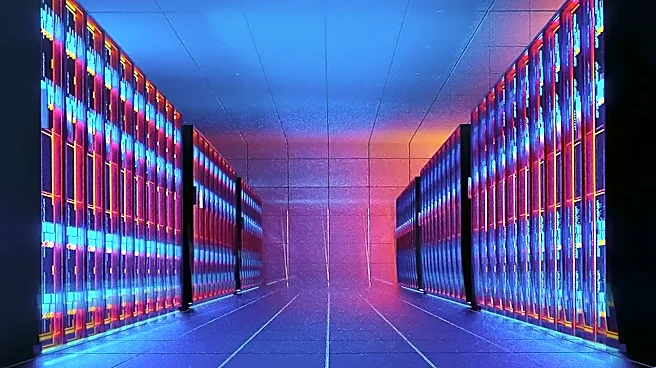
biggest line item in Meta's AI budget is the hardware, specifically the graphics processing units (GPUs) that are the workhorses of AI training. Earlier this year, CEO Mark Zuckerberg announced plans to acquire 350,000 NVIDIA H100 GPUs, adding to an existing infrastructure to create a total compute power equivalent to about 600,000 H100s. A single H100 GPU can cost anywhere from $25,000 to $40,000. A simple calculation reveals the sheer scale of this investment: 350,000 GPUs at a conservative $30,000 each amounts to over $10 billion, and that's just for one batch of chips. This doesn't even include the newer, more powerful B200 chips or the servers, networking, and storage needed to connect them into a functional 'cluster'.
A Power Bill Rivaling a City
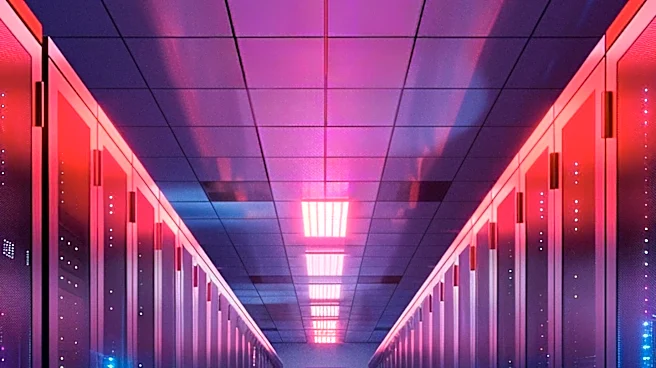
These massive GPU clusters are incredibly power-hungry. A single rack of AI servers can consume between 40 to 100 kilowatts (kW), compared to just 7 to 15 kW for a traditional server rack. When scaled up to the size of a Meta data center, the energy consumption becomes astronomical. A large AI data center can easily consume 100 megawatts (MW) of power or more, which is enough to power tens of thousands of homes. Some of the largest planned facilities are even targeting the gigawatt-scale, consuming as much electricity as a major city. This immense power draw not only creates a multi-million dollar electricity bill but also generates a tremendous amount of heat, necessitating equally expensive and power-intensive cooling systems to prevent the processors from melting down.
The Digital Factories and Human Brains
The hardware can't just sit in a warehouse. It requires specialized data centers—massive, secure, and hyper-connected buildings that are themselves multi-billion dollar projects. Meta's capital expenditure forecasts for 2026 alone are a mind-boggling $135 billion to $145 billion, much of which is dedicated to building out this AI infrastructure. Recently, the company announced plans to raise nearly $98 billion in new funding specifically to cover these AI expansion costs. Beyond the physical plant, there's the human cost. Top AI researchers and engineers command enormous salaries, and building and maintaining the software to effectively utilize these clusters requires a world-class team. These staff costs can run into the tens of millions of dollars, forming a significant portion of the total expense for developing a frontier model.
The Strategic Calculus: Is It Worth It?
Spending tens or even hundreds of billions on an unproven technology seems like a wild gamble. Zuckerberg himself has admitted to committing to these colossal expenditures before knowing if the products would succeed. So why do it? The answer lies in the strategic imperative to not just compete, but to lead the next technological revolution. Meta is in an arms race with giants like Google, Microsoft, and OpenAI. The company that develops the most capable artificial general intelligence (AGI) could redefine computing, communication, and business. From this perspective, the cost to operate these AI clusters isn't just an expense; it's a down payment on owning the future. For Meta, the cost of being left behind is seen as infinitely greater than the price of admission to the AGI race.