




The Ghost of the 'Glasshole'
Let’s be honest: smart glasses have a PR problem. The term “Glasshole” was coined over a decade ago to describe early adopters of Google Glass who were perceived as socially awkward and invasive for wearing a face-mounted camera. That initial public reaction,
fueled by legitimate privacy concerns about covert recording, created a powerful and lasting stigma. The idea of a wearable camera felt creepy, and the device's bulky, futuristic look made users stand out in all the wrong ways. Recent controversies around people misusing camera-enabled glasses to secretly film others for social media pranks or harassment have only reinforced these fears, with some critics labeling modern devices “pervert glasses.” This legacy has long suggested that smart glasses were a solution in search of a problem—a toy for a niche group, not a tool for the masses.
The Professional Pivot
While the public fixated on privacy issues, a quiet revolution was happening in the professional world. Enterprises across various sectors began adopting augmented reality (AR) glasses not as a novelty, but as a core productivity tool. In manufacturing and logistics, workers use them to get hands-free instructions, with digital overlays guiding them through complex assembly tasks or pointing them to the right item in a massive warehouse. This reduces errors, speeds up processes, and improves safety. In medicine, a surgeon can use smart glasses to consult with a remote expert during a complex procedure, with the expert seeing exactly what the surgeon sees and providing real-time guidance. This “see-what-I-see” capability is transforming training, remote support, and field service operations by giving frontline workers instant access to expert knowledge without ever leaving the job site.
A New Lens on Accessibility
Perhaps the most powerful counterpoint to the “tech bro” narrative is the growing use of smart glasses as an accessibility tool. For people who are blind or have low vision, these devices are becoming life-changing. Companies like Envision have developed glasses that use AI to read text from menus, signs, and even handwriting aloud to the wearer. The built-in cameras can describe surroundings, recognize faces, and help users navigate unfamiliar environments. Some models can provide live captions for people with hearing impairments or perform real-time language translation delivered as audio, a feature that requires no visual interface and is uniquely accessible to blind users. This isn't about capturing cool videos; it's about providing a new level of independence and interaction with the world.
The Quiet Consumer Revolution
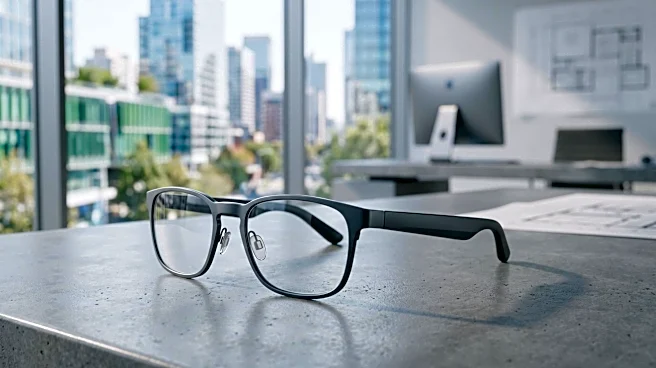
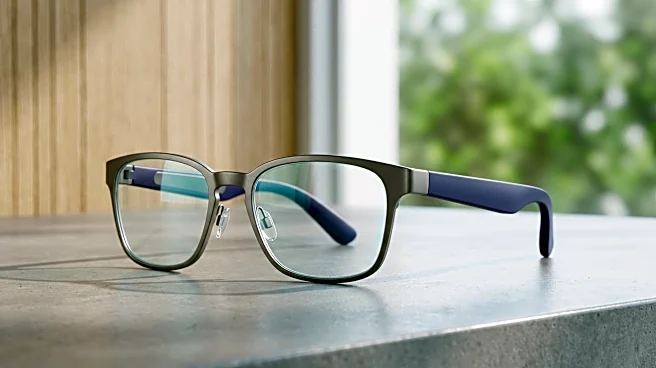
Even on the consumer front, the market has learned its lesson from the Google Glass era. The most successful recent models, like the Ray-Ban Meta glasses, have prioritized a fashion-first strategy. They look and feel like regular sunglasses or prescription frames, which has been critical in overcoming the social awkwardness barrier. People are less afraid to wear them in public because they don't scream “I’m wearing a computer on my face.” While the functionality is currently limited to taking photos and videos, listening to music, and making calls, the integration is seamless. You can capture a moment without fumbling for your phone or listen to a podcast without sticking buds in your ears. This subtlety is normalizing the technology, shifting it from a statement piece to a genuinely useful, hands-free extension of your smartphone.