



A World Tangled in Wires
Cast your mind back to the mid-1990s. The digital revolution was gaining speed, but it was a tangled mess. Every new gadget—from the burgeoning mobile phones to laptops and the very first personal digital assistants (PDAs)—came with its own proprietary
cable. Connecting a phone to a computer, or a computer to a printer, meant fumbling through a drawer of nearly identical, yet frustratingly incompatible, plastic snakes. In 1994, engineers at the Swedish telecom giant Ericsson, led by Dr. Jaap Haartsen, were tasked with solving this exact problem. The goal was simple but ambitious: create a universal, short-range radio link to replace all those RS-232 data cables. They envisioned a world where devices could talk to each other effortlessly, without a physical tether. This wasn't about streaming movies; it was about the fundamental need for a cheap, reliable wireless handshake.
A Viking's Alliance of Rivals
Ericsson knew it couldn't create a universal standard alone. For a cable-replacement technology to work, everyone had to adopt it. In a move of strategic genius, the company brought its fiercest competitors to the table. In 1998, Ericsson, Intel, Nokia, Toshiba, and IBM formed the Bluetooth Special Interest Group (SIG). The name itself was meant to be a temporary codename, suggested by Intel's Jim Kardach. It was inspired by the 10th-century Viking king Harald "Bluetooth" Gormsson, who was famous for uniting the warring tribes of Denmark and Norway. The analogy was perfect: one king to unite the tribes, one standard to unite the disparate PC and cellular industries. The iconic logo is a combination of two ancient runes representing Harald's initials (H and B). The name stuck, forever linking the technology to a piece of Scandinavian history.
The Gospel of Low Power and Low Cost
This is the core of Bluetooth's design philosophy and the "real reason" for its specific traits. The SIG made a crucial decision: for this technology to be adopted globally, it had to be incredibly cheap to implement and consume very little power. This was more important than speed or range. They wanted to create a technology that could be put into a tiny, inexpensive headset that could run for days on a small battery. This focus on low power and low cost dictated every other engineering choice. It's why early Bluetooth had limited range—typically around 10 meters—and what seemed like slow data speeds. The engineers weren't trying to compete with Wi-Fi; they were trying to kill the cable. By prioritizing accessibility over raw performance, they ensured that any manufacturer, for just a few dollars, could add Bluetooth to their device, opening the door for the massive ecosystem of wireless accessories we have today.
Dancing Through a Crowded Room
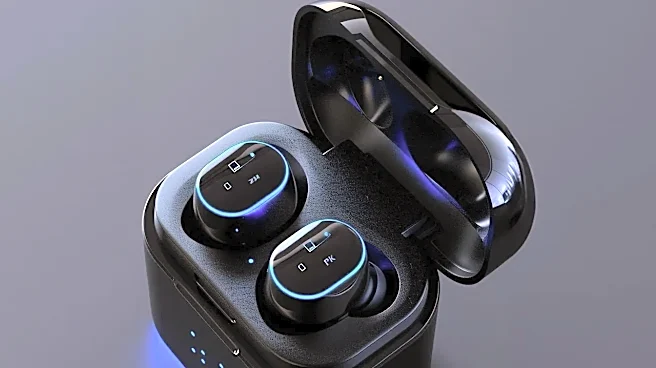
The chosen radio frequency for Bluetooth, the 2.4 GHz band, was a double-edged sword. It was unlicensed and globally available, which was perfect for a universal standard. But it was also incredibly "noisy" and crowded, shared with everything from Wi-Fi routers and cordless phones to microwave ovens. To solve this, Bluetooth's designers implemented a clever technique from the 1940s called frequency-hopping spread spectrum (FHSS). A connected pair of Bluetooth devices rapidly and constantly hops between dozens of different channels in a synchronized pattern, thousands of times per second. Later versions introduced Adaptive Frequency Hopping (AFH), which allows devices to detect which channels are busy or have interference and actively avoid them. This makes the connection robust and resilient, allowing your tiny earbuds to maintain a stable link even in a room flooded with other wireless signals.
An Evolution the Founders Never Imagined
While Bluetooth Classic was a wild success, the game changed in 2010 with the introduction of Bluetooth Low Energy (BLE) as part of the Bluetooth 4.0 specification. BLE was a separate protocol built from the ground up with an even more extreme focus on ultra-low power consumption. It allows devices like fitness trackers, smart home sensors, and medical monitors to run for months or even years on a single coin cell battery by sending tiny bursts of data and then returning to a deep sleep mode. This evolution took Bluetooth far beyond its original mission of replacing cables. It became the foundational technology for the Internet of Things (IoT), connecting billions of small, smart devices and creating markets its founders could have never predicted.