


So, What Is It? AI That Teaches Itself
Imagine an AI that doesn’t need a human to label millions of images of cats to learn what a cat looks like. That’s the core idea of self-supervised learning. Instead of relying on expensive, human-labeled data, SSL models create their own learning problems
from raw, unlabeled information. Think of it like a human baby learning about the world. A baby learns that unsupported objects fall not because someone tells them, but through observation and prediction. Similarly, an SSL model learns about language by predicting a missing word in a sentence or understands images by filling in a blanked-out patch. It generates its own quiz from the data, teaching itself the underlying patterns and structures of the world. This solves a massive bottleneck in AI development: the need for enormous, hand-labeled datasets.
Smarter Robots, From Warehouses to Homes
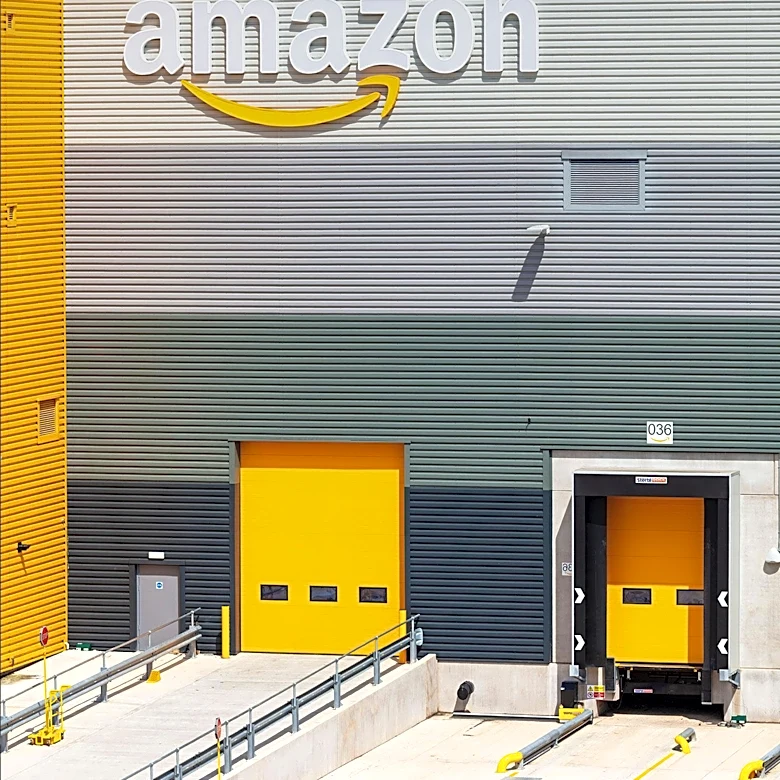
One of the most tangible impacts of SSL over the next decade will be in robotics. Today's robots often struggle to adapt to new environments. SSL changes that by allowing them to learn from observation and trial-and-error with minimal human guidance. For example, a robot can learn to manipulate novel objects simply by watching videos and connecting the visual information to text descriptions of the actions. We're already seeing this in logistics, where robots learn to grasp and move objects they’ve never seen before. Looking forward, this capability will accelerate the development of autonomous drones that can navigate complex indoor spaces and, eventually, more capable domestic robots that can handle chores by learning from the unstructured data of a home environment.
A Revolution in Medicine and Science
The next decade will see SSL-powered AI make significant breakthroughs in science and healthcare. These fields have vast amounts of data, like medical scans and protein sequences, but labeling it is a specialized and costly process. Self-supervised models can learn from this unlabeled data to identify patterns that escape human notice. This is poised to accelerate drug discovery, help diagnose diseases earlier from complex scans, and even model biological systems with greater accuracy. Stanford’s HAI has highlighted the potential for SSL to revolutionize medical image classification, where it can learn from countless X-rays or MRIs without needing a radiologist to label every single one. This will not replace doctors but will become a powerful tool to augment their expertise.
More Personal and Context-Aware AI
The large language models (LLMs) we use today are already built on a foundation of self-supervised learning. Over the next decade, this will become even more refined, leading to AI assistants that truly understand our context and intent. Instead of just predicting the next word, future models will have a more robust, common-sense understanding of the world, learned through observing text, images, and video. This will power everything from hyper-personalized content recommendations to AI that can automate complex digital workflows across multiple apps. Some experts predict SSL will be crucial for enabling real-time predictive systems on edge devices like our phones and cars, making them smarter without constantly needing to connect to the cloud.
The Hurdles on the Horizon
The road ahead isn't without its challenges. Training these massive models requires immense computational power, which can be costly and energy-intensive. There is also the risk that models trained on vast, unfiltered internet data will learn and amplify existing societal biases. Furthermore, designing the right "pretext task"—the puzzle the AI has to solve to teach itself—is still more of an art than a science and can be difficult to get right. Overcoming these issues will be key to unlocking the full potential of self-supervised learning, ensuring the technology develops in a way that is both powerful and equitable.