







SaaS: Ending the Software Installation Nightmare
Let’s start with the one you use every day, probably without thinking about it: Software as a Service (SaaS). Think Gmail, Salesforce, or Microsoft 365. Before SaaS became dominant, getting new software was a pain. Businesses bought licenses, received
physical media like CD-ROMs, and paid IT staff to install it on every single computer. Updates were a nightmare of patches and new installations, and accessing your work from another device was often impossible. SaaS was designed to solve this distribution and maintenance problem. Companies like Salesforce, founded in 1999, pioneered the idea that complex business software could be delivered through a web browser. The 'real reason' for its design was simple: make powerful software accessible from anywhere, eliminate the need for manual installations, and ensure every user is always on the latest version. The vendor handles all the hosting, maintenance, and updates. For businesses, it shifted a large upfront capital expense into a predictable operational subscription.
IaaS: Escaping the Expensive Data Center
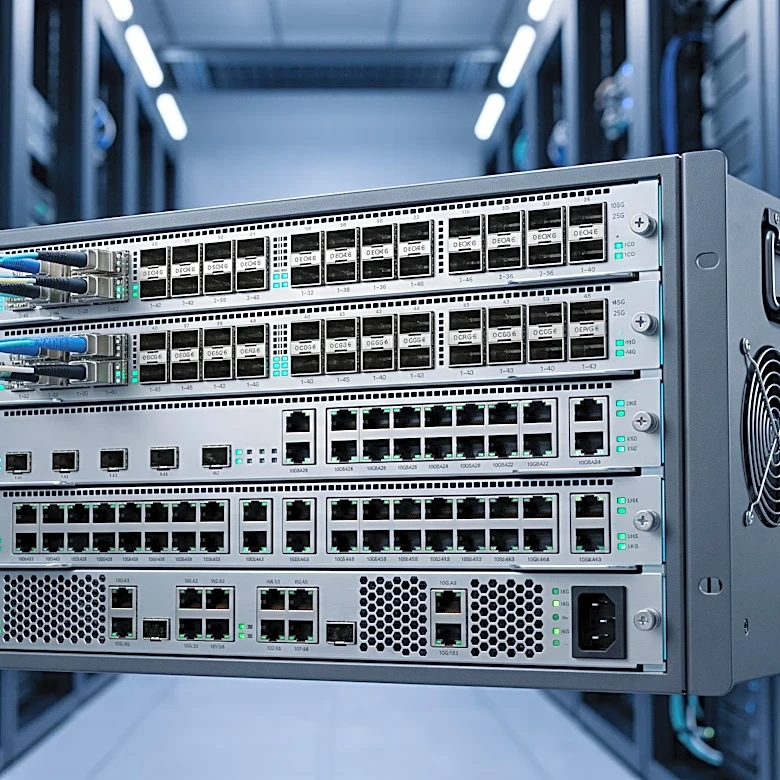
While SaaS solved the software problem for end-users, another monster lurked in the background: the physical data center. For decades, if a company wanted to run its own applications, it had to buy, house, and maintain its own servers. This meant massive capital investment, complex capacity planning (what if your website suddenly got popular?), and paying for electricity and cooling for machines that might be idle most of the time. Infrastructure as a Service (IaaS) was designed to solve the hardware problem. In the early 2000s, Amazon was struggling to scale its own e-commerce operations, with teams constantly rebuilding the same basic infrastructure. They realized they could package this internal solution—standardized, virtualized computing resources—and sell it as a service. With the launch of Amazon Web Services (AWS) offerings like Elastic Compute Cloud (EC2) in 2006, any developer could rent virtual servers, storage, and networking on a pay-as-you-go basis. The 'real reason' for IaaS was to liberate companies from owning physical hardware, allowing them to scale on demand and convert a huge capital cost into a flexible operating expense.
PaaS: Freeing Developers from Server Management
IaaS was a revolution, but it created a new kind of work. Developers were freed from racking servers, but they now had to become expert system administrators for their virtual machines. They were still responsible for installing and managing the operating system, security patches, databases, and all the other 'platform' components needed just to run their code. This slowed down the actual process of building applications. Platform as a Service (PaaS) was designed to solve this developer productivity problem. Services like Heroku and Google App Engine (which launched in 2008) offered a new promise: just give us your code, and we’ll handle the rest. PaaS provides the operating system, runtime environment, and databases, creating an abstraction layer over the raw infrastructure. The 'real reason' for PaaS was to let developers focus exclusively on writing code and deploying applications without worrying about the underlying environment. It dramatically sped up development cycles by removing the undifferentiated heavy lifting of platform management.
FaaS: Killing the Cost of Idle Time
Even with PaaS, a cost inefficiency remained. You were still paying for servers to be 'on' and waiting for requests, even if they were doing nothing. For applications with unpredictable or spiky traffic, you were paying for a lot of idle time. Function as a Service (FaaS), often called 'serverless' computing, was designed to solve this final efficiency problem. Pioneered by services like AWS Lambda in 2014, FaaS breaks applications down into small, independent functions that run only in response to a specific event—like a user uploading a file or an API request. The 'real reason' for FaaS is to achieve ultimate cost-efficiency. Instead of paying for a server that's always on, you pay only for the compute time your function actually uses, measured in milliseconds. The cloud provider handles everything else: scaling, patching, and provisioning. This event-driven model completely eliminates the concept of an idle server from a cost perspective.