







1. Focusing Only on 'Wow' Demos
Every Apple keynote has its flashy moments—the jaw-dropping feature that dominates headlines. For AI, this might be a real-time translation feature or a new generative art tool. The mistake is assuming the most heavily demonstrated feature is the most strategically
important. Apple’s real AI work is often less spectacular; it’s happening in the background. Analysts should look past the demo and ask what underlying architecture makes it possible. Often, the true signal is an improvement to the Neural Engine or a new developer framework, not the single feature it enables.
2. Ignoring the On-Device vs. Cloud Distinction
Not all AI is the same. The biggest distinction in Apple’s world is what happens on your device versus what gets sent to a server. Analysts often lump all AI features together, but Apple consistently prioritizes on-device processing for speed, efficiency, and especially privacy. When a new AI capability is handled locally, it signals a focus on personal data security and a desire to avoid costly server dependencies. Conversely, when Apple does use the cloud, via its 'Private Cloud Compute', the specifics of how it protects that data are the real story. The key is to map which features run where, as it reveals Apple's priorities.
3. Confusing a Feature with a Platform
A new AI-powered photo editing tool is a feature. A framework that allows thousands of developers to build their own AI-powered photo tools is a platform. It's an easy mistake to conflate the two, but it’s a critical one. Apple's long-term strategy isn’t just about making its own apps smarter; it's about enabling its entire developer ecosystem. When analysts fixate on Apple's 'Genmoji' instead of the new 'Foundation Models' framework that developers can use, they miss the forest for the trees. The platform move is always the bigger deal because it scales innovation far beyond what Apple could do alone.
4. Underestimating 'Boring' Integration
The most powerful AI is often the most invisible. Instead of a standalone 'AI app', Apple’s strategy is to weave intelligence into the operating system itself—summarizing notifications, prioritizing emails, or offering contextual suggestions in Messages. Analysts looking for a single, killer AI app are looking for the wrong thing. The real signal of progress is how deeply AI is integrated into existing workflows. This 'ambient' approach doesn't create dramatic headlines, but it creates immense user value and ecosystem lock-in, which is central to Apple's business model.
5. Overlooking the Hardware’s Role
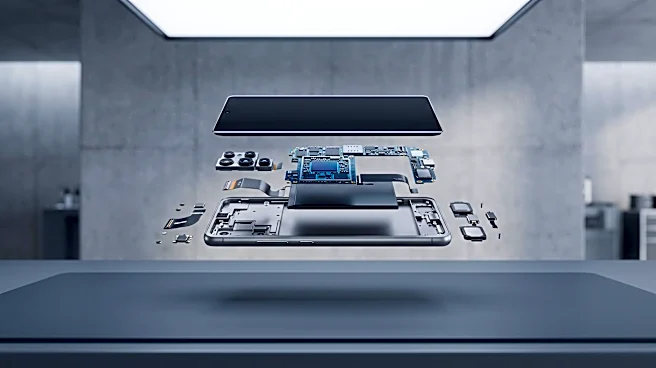
With Apple, the software story is always a hardware story. The company’s biggest competitive advantage is its tight integration of silicon, software, and services. Any discussion of Apple's AI that doesn't start with the capabilities of its latest A-series chip is missing the point. The Neural Engine, introduced years ago, laid the groundwork for today's on-device AI. Analysts who treat the iPhone 18 as just a shell for software fail to appreciate that Apple's AI ambitions are literally baked into the hardware, enabling performance and privacy that competitors struggle to match.
6. Forgetting About the Developer
An Apple event is as much for developers as it is for consumers. While the world sees a new iPhone, developers see new tools like Core AI, App Intents, and other frameworks that let them tap into the device’s power. An analyst who only evaluates what Apple built is ignoring the army of developers Apple is empowering. The long-term impact of the iPhone 18's AI won't be measured by its launch-day features, but by the thousands of innovative apps that emerge over the next year because of the new tools Apple provided.
7. Taking a Narrow View of 'AI'
Today, 'AI' has become shorthand for large language models (LLMs) and chatbots. But Apple has been deploying machine learning for years in less obvious but crucial ways: for computational photography, battery optimization, and biometric security like Face ID. Analysts who only start counting AI mentions when they hear 'generative' are suffering from recency bias. A smarter reading involves connecting the new, flashy AI features to the deep, existing foundation of machine learning that has been part of the iPhone for generations. It’s an evolution, not a revolution.