










The King of Search
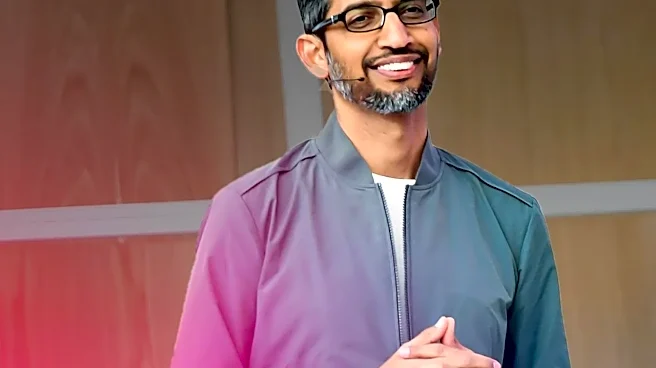
You can’t tell the story of Google Search without telling the story of Sundar Pichai. Joining the company in 2004, his career is inextricably linked to the dominance of its most vital product. Pichai was the product mind who championed the creation of the Chrome
browser, a defensive masterstroke designed to protect Google’s search business from rivals like Microsoft’s Internet Explorer. His steady rise through the ranks, overseeing Chrome, Android, and other key products, culminated in his appointment as Google's CEO in 2015. Known for a calm, deliberate leadership style, Pichai was seen as the perfect steward for a company that had already won the search wars. He wasn’t the flamboyant founder; he was the master operator who perfected the machine that prints money.
Cracks in the Castle Walls
For the first time in two decades, Google's dominance is facing a credible, multi-front challenge. The biggest threat is generative AI. Conversational “answer engines” like Perplexity AI and ChatGPT are rapidly changing user habits, offering direct responses instead of a list of blue links. This shift is reflected in a startling statistic: a significant percentage of Google searches now result in zero clicks, as users get their answer from Google's own AI summaries without ever leaving the page. Furthermore, younger audiences increasingly turn to platforms like TikTok and Reddit for discovery, bypassing Google altogether. This fundamental change in user behavior directly threatens the advertising ecosystem that forms the bedrock of Google’s revenue. Adding to the pressure are persistent antitrust battles that seek to dismantle the very structure of Google's search and advertising business.
The Costly AI Counterattack
Google hasn't been sitting idle. The company has gone all-in on AI, making its own Gemini models the centerpiece of a massive search overhaul. The most visible change is the aggressive rollout of “AI Overviews,” which provide AI-generated summaries at the top of many search results. The problem is twofold. First, these overviews have been plagued by embarrassing and well-publicized errors, creating a public relations headache. Second, by answering questions directly, AI Overviews cannibalize the very clicks to publisher websites that Google's ad business relies on. Studies have shown that the presence of an AI summary significantly reduces click-through rates to other sites. This puts Pichai in a strategic bind: he must fund an incredibly expensive arms race in AI, with massive capital spending on data centers, while the primary product of that investment risks eroding the company's main revenue stream.
All Eyes on the Bottom Line
When Alphabet announces its earnings, Wall Street will be looking past the headline revenue and profit numbers, which are expected to show strong growth. The real focus will be on the underlying signals. Analysts will scrutinize the growth rate of Google Cloud and the performance of Search advertising to see if the core business is holding up under pressure. They will listen intently to management’s commentary on capital expenditures to gauge the true cost of the AI war. Pichai's leadership itself is under a microscope. While long respected for his thoughtful approach, he has faced criticism for being a “peacetime CEO” who may be too slow and risk-averse for an existential battle with nimble AI rivals. This earnings call is a crucial moment for him to project strength and articulate a clear, convincing vision for how Google not only survives but thrives in the AI era. The question is no longer just about winning the next quarter, but about securing the next decade.