







The New Theater of Value
On Wall Street, an earnings call is where a public company’s executives justify its existence. They present quarterly results, field tough questions from analysts, and provide 'guidance' on future performance. The goal is to reassure investors that their
capital is safe and poised for growth. For the hyper-competitive world of artificial intelligence, OpenAI's DevDay has become the equivalent spectacle. Officially, it's a conference for developers to learn about new tools and APIs. Unofficially, it's a referendum on the future of AI, where the 'stock' being traded isn't financial, but technological dominance. With OpenAI reportedly seeking funding at valuations soaring towards $1.4 trillion, the stakes are astronomically high. Every product reveal is a signal to the market, telling competitors, investors, and the thousands of startups building on its platform where the industry is headed next.
It’s All About the ‘Metrics’
Financial analysts obsess over metrics like Earnings Per Share (EPS) and revenue growth. The AI community has its own set of crucial numbers. Instead of dollars and cents, they scrutinize token prices, model performance benchmarks, API latency, and new capabilities. When CEO Sam Altman announces a new model like 'GPT-6.1 Sol' that is significantly cheaper than its predecessor, it’s not just a technical update; it’s a seismic event. It's a price war declaration against rivals like Anthropic, Google, and Meta. It dictates which AI-powered services become economically viable and which startup business models are instantly rendered obsolete. On 'AI Twitter'—the digital town square for researchers, developers, and venture capitalists—the dissection is immediate. Threads pop up analyzing the cost-per-million-tokens, debating the implications of a new 'Agents API' that can automate complex work, and calculating the downstream impact on the entire software ecosystem.
Reading the ‘Forward-Looking Statements’
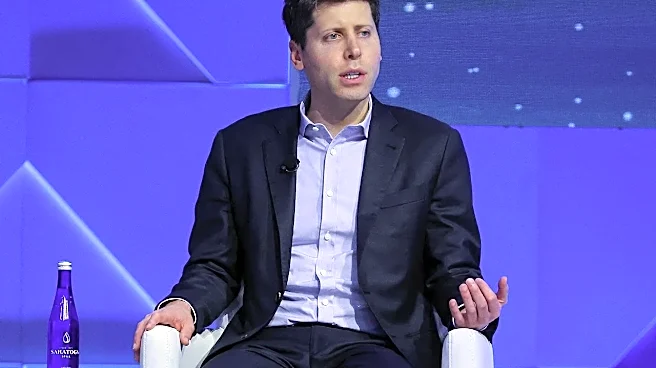
Earnings calls are notorious for their carefully scripted 'forward-looking statements'—the section where CEOs hint at future strategy. At DevDay, Sam Altman’s keynote serves the exact same function. His presentation is a masterclass in narrative control, laying out a vision for where OpenAI is going. When he outlines a three-part plan for business dominance—better models, easier building, and a marketplace for distribution—he's providing guidance for the entire industry. This isn't just about what developers can build today; it's about what OpenAI plans to own tomorrow. The community hangs on every word, parsing them for strategic intent. Announcements of features that compete with existing partners, like the 'Decisions API', are interpreted as a warning shot, signaling OpenAI's intention to capture more value for itself, much like Amazon developing private-label products that compete with its third-party sellers.
The CEO as Barometer-in-Chief
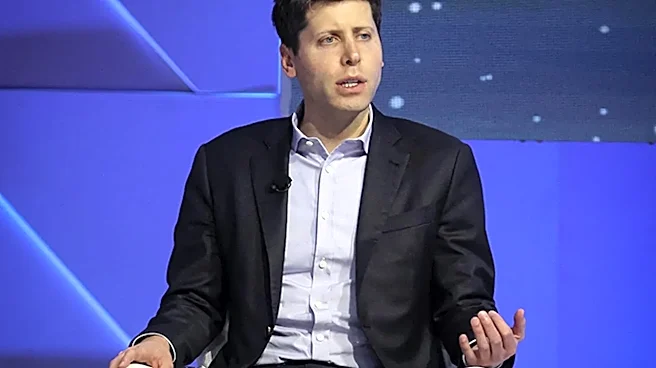
On an earnings call, analysts don't just listen to what a CEO says; they analyze how they say it. Their tone, confidence, and ability to handle tough questions are all data points. Sam Altman, like Steve Jobs before him, has become a personality whose performance is inseparable from the company's. His confidence on stage, his framing of the competitive landscape, and his responses during post-keynote Q&As are scrutinized for signs of strength or weakness. He is the ultimate product, representing the company's ambition and stability. This intense focus exists because the AI landscape is volatile. Safety concerns, high-profile hacks, and intense competition create a backdrop of uncertainty. Altman's steady hand at the tiller is meant to project control, assuring the ecosystem that despite the chaos, OpenAI has a clear and unassailable path forward.