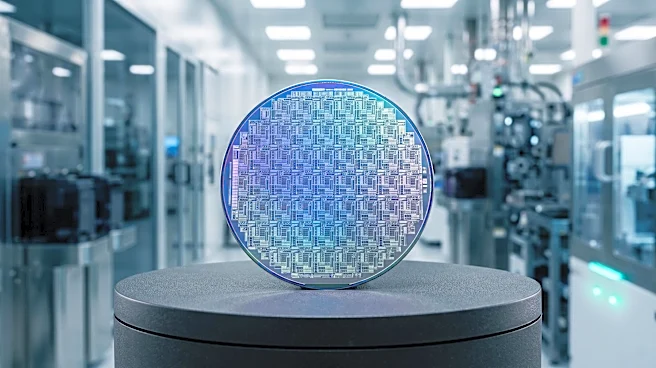




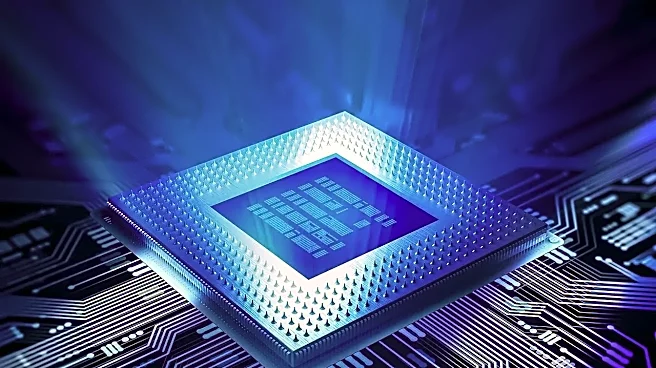



Every computer, from the phone in your pocket to the server running your favorite app, is powered by a chip with a distinct personality. Most of them trace their lineage back to one of two rival clans: ARM or x86. Their differences are no accident.
x86: The King of Compatibility
Let's
go back to the late 1970s. A company named Intel releases the 8086 processor, the ancestor of the x86 family that would come to dominate personal computers. From the very beginning, Intel's strategy was built on a powerful, market-locking idea: backward compatibility. Each new generation of processor had to run the software written for the old ones. This was a brilliant business move. It meant that as Intel released faster chips—the 80286, 80386, and so on—customers could upgrade their hardware without losing access to their existing programs. This created an incredibly sticky ecosystem for the 'Wintel' (Windows and Intel) platform that defined the PC era. But this promise came at a cost. To ensure old software kept working, Intel couldn't just start fresh; it had to keep adding new instructions on top of the old ones. This led to a Complex Instruction Set Computer (CISC) architecture, where single instructions can perform multi-step operations. Over decades, this created layers of complexity, like building a modern skyscraper on top of a historic cottage. The result was powerful but hungry for electricity.
ARM: The Champion of Efficiency
Meanwhile, across the pond in Cambridge, England, a different story was unfolding. In the 1980s, a British company called Acorn Computers needed a processor for its new line of educational PCs. They weren't happy with the options on the market, finding them either too expensive or too power-hungry. So, in a move that sounded audacious, a tiny team decided to design their own. Their goal was the polar opposite of Intel's. They prioritized simplicity, low cost, and, crucially, low power consumption. They couldn't afford pricey packaging, so the chip had to run cool enough for cheap plastic. This forced frugality led them to a Reduced Instruction Set Computing (RISC) design. Instead of complex commands, an ARM processor used a small vocabulary of simple instructions that executed extremely quickly. The first Acorn RISC Machine, or ARM, was born.
Two Philosophies, Two Business Models
The 'real reason' for their divergence lies not just in engineering but in two radically different business models. Intel operated as a vertically integrated giant: it designed, manufactured, and sold its own high-margin chips. It sold a finished product. ARM, which was spun off into its own company in 1990, did something completely different. It didn't make or sell chips at all. Instead, it licensed its processor designs—its intellectual property (IP)—to other companies. For a fee and a small royalty on each chip sold, anyone from Apple to Samsung to Qualcomm could take ARM's efficient blueprints and integrate them into their own custom chips. This flexible model was revolutionary. While Intel was focused on dominating the PC and server market with its own brand, ARM's DNA was quietly spreading across the globe, becoming the foundation for a new world of mobile, battery-powered devices.
The World They Built
For decades, these two philosophies carved out separate empires. x86's raw performance and massive software library made it the undisputed king of desktops, laptops, and data centers, where access to a power outlet was a given. Its complexity was a worthwhile tradeoff for its power and compatibility. ARM's incredible power efficiency made it the only logical choice for the smartphone revolution. The phone in your pocket can run all day on a small battery precisely because its ARM-based processor sips power. This wasn't because one was definitively 'better' than the other; they were just optimized for different problems. x86 prioritized performance and its legacy software catalog. ARM prioritized efficiency and a flexible licensing model that spurred innovation across hundreds of companies.