






The Story Reviews Always Tell
Spend any time watching PC build guides and you'll hear the same story. A non-modular power supply unit (PSU) comes with all its cables permanently attached. It's the cheaper option, but you're left to wrestle a nest of unused cables into the back of your
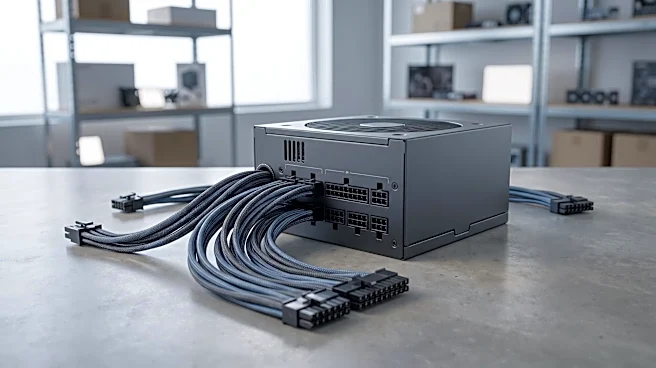
case. A fully modular PSU, by contrast, is a builder's dream. You only connect the cables you need, resulting in a cleaner look, better airflow, and easier upgrades. Semi-modular units split the difference, with essential cables fixed and peripheral ones detachable. For years, the decision has been framed almost exclusively around these points: aesthetics, airflow, and budget. If you care about a tidy build and have the extra $30-$50, go modular. If you're pinching pennies, go non-modular and get good with zip ties. This advice isn't wrong, but it's dangerously incomplete. It skips over the most important difference, one that has nothing to do with how your PC looks and everything to do with how it works—or fails.
The Detail Hiding in Plain Sight
The hidden detail isn't about performance loss or added electrical resistance from modular connectors—those effects are generally negligible in quality units. The real, critical difference is that the modular jacks on the PSU itself are not standardized. This lack of standardization creates two significant, often overlooked risks. First, it introduces more physical points of failure. A non-modular PSU has its cables soldered directly to the internal board, creating a single, robust connection. A modular PSU introduces a second connection point for every single cable: the plug at the PSU-end. While generally reliable, it's an extra mechanical link that can potentially wear out or fail. But the far greater danger is the non-standardized pinout—the specific arrangement of wires inside the connector. Even if cables from two different brands (or even two different models from the same brand) have physically identical plugs, the wires inside may be in a completely different order.
Why This Tiny Detail Is a Huge Risk
Imagine grabbing a spare cable from an old build because you misplaced one. It clicks perfectly into your new modular PSU. You power on your system, and you're met with a pop, a puff of smoke, and the smell of dead electronics. This scenario is shockingly common. Because there is no industry standard for PSU-side modular connections, manufacturers are free to wire them however they see fit. Plugging a cable with the wrong pinout into your PSU can send 12 volts of power down a wire that your hard drive or motherboard expects to be a ground line. This instantly creates a short circuit, permanently destroying the connected component and sometimes the PSU itself. This risk is never present with a non-modular PSU, as you can only use the cables that are permanently attached. It's a silent trap set for anyone who reuses cables, buys a used PSU without its original set, or simply mixes up the contents of their various PC-part boxes over the years. Reviews rarely mention this because they review a new product in its box, using only the included accessories, missing the long-term ownership risk entirely.
So, Which Should You Actually Buy?
Understanding this hidden detail doesn't mean modular PSUs are bad. For most builders, they remain the right choice, but your decision-making process should change. If you are meticulous about organization and are certain you will only ever use the cables that come in the box with your specific PSU, then a modular unit's benefits are clear. They are nearly mandatory for small form-factor builds where every inch of space matters. If you're building a PC for a friend or family member who might not know the danger of mixing cables, a non-modular or semi-modular PSU might be the more responsible choice. For a semi-modular unit, the most critical cables are permanently attached, reducing the number of potential mix-ups. A non-modular PSU completely eliminates the risk of a cable pinout catastrophe. While it may seem like a step backward, for a simple and safe build that prioritizes long-term reliability over aesthetic perfection, the humble non-modular PSU has a distinct, hidden advantage that most reviews completely miss.