








It's a Problem of Physics, Not Just Power
The first mistake is thinking a single, muscular router can blast a signal through anything. Wi-Fi signals are radio waves, and they weaken every time they pass through an obstacle. In a one-level home, that usually means a few drywall partitions. But
in a two-story house, the signal has to punch vertically through a floor, which is a dense sandwich of wood, insulation, plumbing, and electrical wiring. Materials like concrete and metal are notorious signal killers, effectively absorbing or reflecting the radio waves before they can reach your devices upstairs. That's why your downstairs living room has five bars while the upstairs bedroom struggles to load a webpage; the signal is fighting a battle against physics, and losing. It’s not about your internet speed, but the environment the signal has to navigate.
The Flaw of a Single Router
Even the best router has its limits. Most are designed to spread a signal horizontally, like a donut. For a two-story home, you need vertical coverage. While you can try to find a 'sweet spot' — like placing the router high on the first floor or low on the second floor — you’re still asking one device to do the job of many. Obstructions like brick fireplaces, large appliances, and even metal-laced plaster can create dead zones that no amount of router repositioning can fully solve. This is where even tech-savvy users get frustrated; they buy an expensive router, place it centrally, and still face inconsistent coverage because the home's layout and construction materials create too many barriers for a single point of broadcast.
The Solution: Stop Repeating, Start Meshing
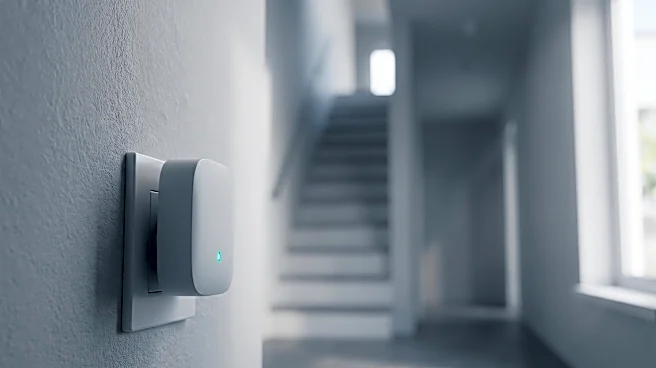
For years, the go-to solution was a Wi-Fi range extender. These devices act like a relay, picking up your router's signal and rebroadcasting it. While cheap and simple, they have a major flaw: they typically create a separate network and can cut your Wi-Fi speed in half. You have to manually switch networks as you move through the house, and the repeated signal is weaker than the original. The modern, superior solution for a multi-story home is a mesh Wi-Fi system. Instead of one router, a mesh system uses multiple 'nodes' placed around your house. They all work together as a single, unified network. As you move from downstairs to upstairs, your device seamlessly hands off from one node to the next, always connecting to the strongest signal without any drop-offs or network switching. It's like having a perfectly placed mini-router in every key area.
Quick Fixes You Can Try Today
Before you invest in new hardware, there are a few placement tricks that can make a real difference. First, get your router out of the corner, basement, or a cabinet. Place it in a central, open area, as high up on the first floor as you can manage. This gives the signal a clearer path both horizontally and vertically. If your router has adjustable antennas, try pointing one vertically to cover the main floor and angling another one horizontally to help push the signal upstairs. Also, be mindful of interference from other electronics; microwaves and cordless phones can disrupt your Wi-Fi signal, especially on the crowded 2.4 GHz band. These small adjustments won't magically fix a home with concrete walls, but they can often turn a dead zone into a usable one.