






The Birth of a Window to the World
In 1989, the internet was a text-based, command-line world, a powerful tool for academics but largely impenetrable to the public. At CERN, the European particle physics laboratory, British scientist Tim Berners-Lee envisioned a way to simplify information
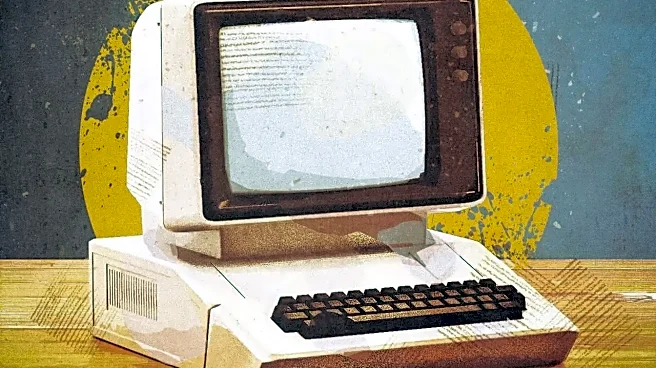
sharing for researchers scattered across the globe. His solution, developed in 1990 on a NeXT computer, included the first web server and the first web browser, which he called WorldWideWeb. Unlike later browsers that were just for viewing, WorldWideWeb was also a web editor—a tool for creating the very thing it explored. But its genius was also its limitation: it only ran on the expensive and rare NeXT machine. For the web to go global, it had to escape its first home.
The Visionary: Sir Tim Berners-Lee
Tim Berners-Lee is the one name from this era that most people recognize, and for good reason. After inventing the web, his most profound contribution wasn't another piece of software, but a framework for governance. In 1994, he left CERN to found the World Wide Web Consortium (W3C) at MIT. The W3C doesn't build products; it builds the rulebook. It establishes and publishes the open, royalty-free standards—like HTML and CSS—that act as the web's universal grammar. This quietly revolutionary act ensured no single company could own the web's core technology. Every time a website renders correctly on Chrome, Safari, and Firefox, it’s a testament to the W3C's success. Berners-Lee’s work ensured the web would be a public commons, setting the stage for decades of American tech innovation to be built on top of a shared, stable foundation.
The Unsung Engineer: Nicola Pellow
While Berners-Lee's browser was trapped on the NeXT computer, the task of liberating the web fell to Nicola Pellow, a math student interning at CERN. With little prior programming experience, she was asked to build a browser that could run on practically any machine. The result was the Line Mode Browser, a simple, text-only tool that became the web’s first multi-platform workhorse. It wasn't pretty, but it was universal. This bare-bones browser allowed universities and institutions worldwide to access the web for the first time, proving the concept's viability. Pellow later co-developed the first web browser for Apple's classic Mac OS. Though her name is not widely known, her work cemented a core principle of the web from its earliest days: access for everyone, not just those with the right hardware.
The Evangelist: Robert Cailliau
An idea is only as powerful as its believers. Belgian engineer Robert Cailliau was the web’s first and most crucial evangelist. He co-authored the formal proposal with Berners-Lee, securing the initial funding and institutional support from a skeptical CERN management. While Berners-Lee coded, Cailliau championed the project, organizing student efforts to build more browsers and drumming up interest. He was instrumental in persuading CERN to make a pivotal decision: to release the web's underlying technology into the public domain on April 30, 1993, completely royalty-free. A year later, he organized the very first International WWW Conference, a seminal event that gathered the web's pioneers and created a community out of a loose collection of enthusiasts. Cailliau’s contribution wasn't in code, but in building the human and political infrastructure the web needed to survive and scale.
A Legacy of Openness, Not Empires
The collective legacy of this small group is not a product but a principle: the web should be an open, shared resource. Their non-commercial, academic approach stands in stark contrast to the browser wars and walled-garden ecosystems that would later define the American tech industry. By establishing open standards through the W3C, ensuring cross-platform access from day one, and fighting to make the technology free for all, they shaped the competitive landscape. They created a level playing field where new companies and ideas could flourish without needing to pay a gatekeeper. This foundational work ensured that the web would become a decentralized platform for innovation, rather than a proprietary product controlled by a single entity. The quiet, deliberate decisions made at CERN in the early 1990s are why American computing evolved around an open web, setting the stage for the explosive growth that followed.