

First, What Is This HTTP Thing Anyway?
Let’s start simple. HTTP, or Hypertext Transfer Protocol, is the fundamental language of the web. Think of it as the polite courier that runs between your web browser and a server. Your browser sends an HTTP request saying, "May I please have that webpage?"
and the server sends back an HTTP response with the page's content—text, images, and all. For decades, a trusty version called HTTP/1.1 did the job, but as websites became more complex, it started to feel like a single-lane country road during rush hour.
HTTP/2: The Multi-Lane Superhighway
HTTP/2, standardized around 2015, was a massive upgrade. Its killer feature is called "multiplexing." While HTTP/1.1 made your browser open several connections to download files, often waiting for one to finish before starting another, HTTP/2 opened the floodgates. It allows a browser to send multiple requests and receive multiple files at the same time over a single connection. Imagine that single-lane road being replaced by a ten-lane superhighway. Cars (data) can travel in parallel, making everything feel dramatically faster. This is why the web suddenly felt snappier in the late 2010s; HTTP/2 was the quiet workhorse making it happen, and it still handles over half the web's traffic today.
The Hidden Flaw: A Traffic Jam on the Highway
But HTTP/2 had an Achilles' heel, a phenomenon called "head-of-line blocking." Even on a ten-lane highway, all lanes are part of the same road surface—the TCP protocol. If just one tiny piece of data (a single packet) gets lost or delayed—a common occurrence on spotty Wi-Fi or mobile networks—the entire connection has to stop and wait for that lost piece to be found and re-sent. It’s like one car breaking down and causing a traffic jam across all ten lanes, even though the other nine lanes are clear. All data streams, no matter how small or unimportant, get stuck behind the one that hiccuped.
HTTP/3: Giving Every Car Its Own GPS
HTTP/3, the newest version, fixes this problem by fundamentally changing the road itself. Instead of running on the old TCP protocol, it uses a new one developed by Google called QUIC (Quick UDP Internet Connections). QUIC effectively gives every stream of data its own independent lane, completely separate from the others. If one packet gets lost, only its specific stream is affected. The other streams just continue on their merry way. Using our highway analogy, it's like every car having its own personal, indestructible lane and a GPS that instantly reroutes it around any trouble. This makes the connection far more resilient to the small packet losses that plague mobile and Wi-Fi networks.
Where You'll Actually Feel the Difference
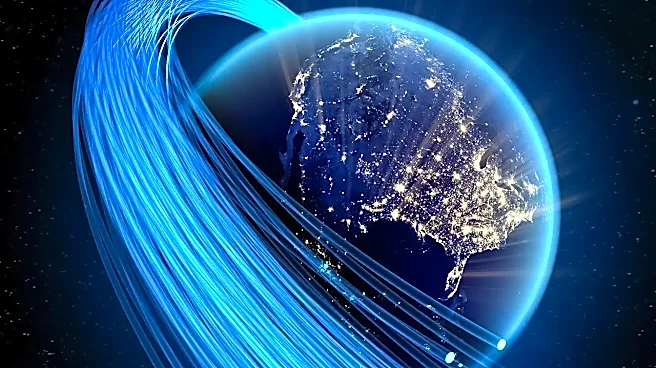
This might all sound abstract, but the benefits are tangible. HTTP/3’s resilience is most noticeable in imperfect conditions. For example, when your phone switches from Wi-Fi to cellular data, QUIC can migrate your connection seamlessly without dropping it. It makes video streaming on a crowded public network less likely to buffer and speeds up initial page loads thanks to a faster “handshake” process that establishes a secure connection in fewer steps. While HTTP/2 was a huge leap for speed on reliable connections, HTTP/3 is built for the messy, mobile-first reality of the modern internet. As of 2026, its adoption is growing steadily, with roughly 40% of major websites now supporting it.