







Stewart Butterfield, Slack
Like Sacks, Stewart Butterfield knows the value of a pivot. Sacks built Yammer into a viral enterprise tool; Butterfield twice turned failed video game companies into massive communication platforms. His first pivot produced Flickr. The second, and more
famous, came when his game 'Glitch' failed. The internal chat tool his team built to communicate during Glitch's development became the foundation for Slack. This move mirrors Sacks’s core belief in product-led growth (PLG), where the product's value is so obvious that it sells itself from the bottom up. Butterfield didn't force a product on the market; he recognized the superior tool his team already had and turned an internal necessity into a multi-billion dollar enterprise solution that redefined workplace communication.
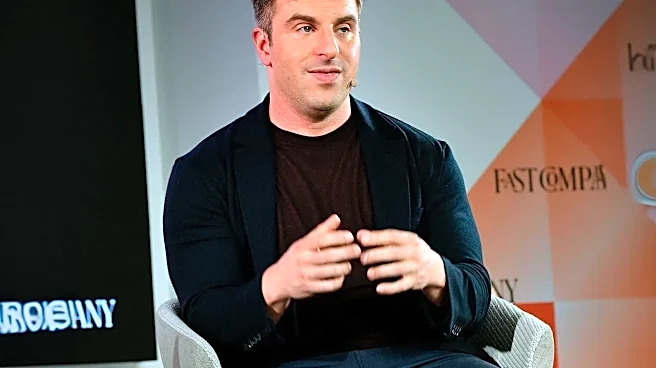
Brian Chesky, Airbnb
If David Sacks is known for operational intensity, Brian Chesky is his counterpart in crisis leadership and brand resilience. When the pandemic hit, Airbnb’s revenue collapsed by 80% in eight weeks. Chesky’s response became a case study in decisive, empathetic leadership. He publicly took responsibility, communicated with radical transparency, and focused the company back on its core business. This echoes Sacks's own experience steering companies through turbulence. Chesky, a designer by training, also shares Sacks’s obsession with product detail. He famously stays deep in the weeds of the user experience, personally leading redesigns to ensure the product remains intuitive and valuable—a 'founder mode' approach that prioritizes product taste over delegating key decisions.
Palmer Luckey, Anduril
David Sacks is famously a contrarian, unafraid to challenge Silicon Valley groupthink. Palmer Luckey embodies that spirit in the extreme. After founding Oculus VR and selling it to Facebook for over $2 billion, Luckey didn't launch another consumer app. Instead, he founded Anduril Industries, a defense technology company aimed at disrupting the slow-moving, relationship-based world of government contracting. Anduril operates like a Silicon Valley startup, building products first with private funding and then selling them to the government, a direct challenge to the traditional model of building to-spec for a government contract. This product-first, institution-challenging approach is pure Sacks. Luckey is betting that superior, AI-powered technology can win on its own merits, even in one of the world's most entrenched industries.
Daniel Ek, Spotify
Daniel Ek’s journey with Spotify is a masterclass in product obsession and long-term vision, two traits central to the Sacks philosophy. When Ek started Spotify, the music industry was being dismantled by piracy. His solution wasn't just a legal alternative; it was a superior product experience. He famously said the only way to win was to create a service that was better than piracy. This relentless focus on the user journey—making it seamless to find and discover music—created a product with an undeniable moat. Like Sacks, who pioneered bottom-up SaaS with Yammer, Ek understood that winning individual users with an incredible product was the path to market dominance. Even as giants like Apple entered the fray, Ek’s unwavering commitment to product innovation and user experience has kept Spotify at the forefront of audio.
Whitney Wolfe Herd, Bumble
Whitney Wolfe Herd built Bumble by identifying a deep user need and creating a product-led solution, a strategy Sacks champions. After co-founding Tinder, she didn't just create a knockoff; she introduced a fundamental product differentiation: on Bumble, women make the first move in heterosexual matches. This wasn't just a marketing gimmick; it was a core product feature that addressed a major pain point in the online dating market for women. This empowered, user-centric approach created a powerful brand and a loyal community. Her early growth strategy of manually targeting sororities and leveraging word-of-mouth on college campuses is a classic example of doing unscalable things to build an initial user base that loves your product—a grassroots tactic that often precedes massive product-led growth.