
The Invisible Journey
Most people think of their smartphone or laptop as the place where the 'thinking' happens. In reality, your device is just a window. When you type a question like 'Why do cats love boxes?' and press send,
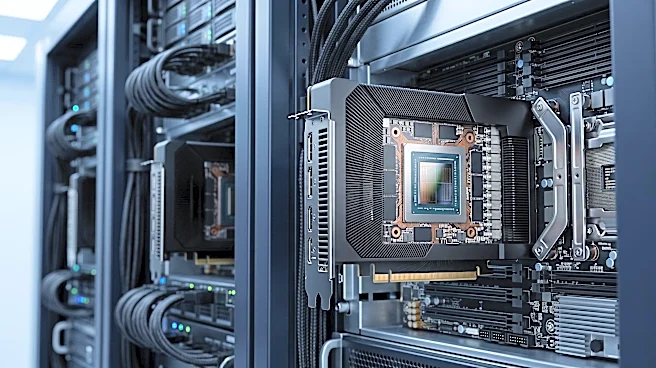
that text doesn't just float through the air to another person. It travels via Wi-Fi or cellular networks into a vast web of fiber-optic cables. These cables act like superhighways, rushing your request toward a massive facility known as a data center. These centers are the heavy lifters of the modern world, housing thousands of servers that perform the intense calculations required to make sense of your words.
From Server Hotels to Digital Brains
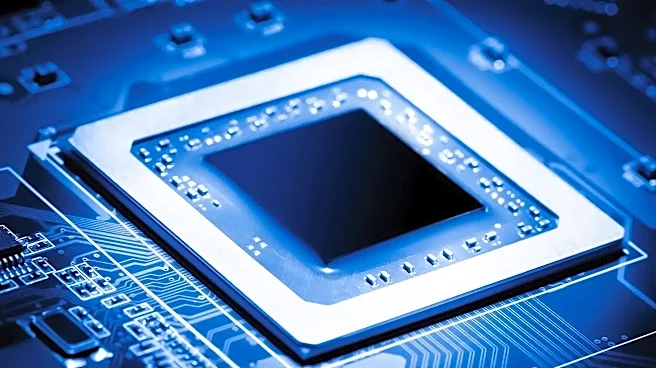
Data centers haven't always been this intense. Originally, they functioned much like 'server hotels'—essentially real estate for computers. Companies would rent out space, power, and cooling to house their hardware. However, the rise of generative AI has fundamentally changed their DNA. While older data centers relied heavily on Central Processing Units (CPUs) for general tasks, modern AI data centers are built around Graphics Processing Units (GPUs). These specialized chips are designed to handle the massive, simultaneous mathematical operations needed to process billions of data points. This shift has turned these facilities from simple storage warehouses into sophisticated 'digital brains' capable of real-time reasoning.
The Anatomy of an AI Response
Once your prompt arrives at the data center, the real work begins in three distinct stages. First is the ingestion: the request hits the server cluster and is broken down into tiny pieces that an AI model can digest. Second is the computation: this is where the magic happens. The AI model analyzes your prompt against hundreds of billions of learned patterns, calculating which word should logically follow the next. This isn't just looking up an answer in a book; it is a massive mathematical prediction performed by thousands of GPUs working in unison. Finally, there is the delivery: once the answer is synthesized, it is sent back through the network to your screen, often appearing word-by-word to simulate a human typing.
The Battle Against Heat and Power
Running an AI model isn't just about math; it is about physics. Because GPUs are performing such incredibly dense calculations, they generate an enormous amount of heat. If a data center cannot move that heat away fast enough, the servers will overheat and shut down, effectively killing the 'brain.' This creates a constant tug-of-war between computational power and thermal management. Modern facilities must invest heavily in advanced cooling technologies and massive power infrastructures to ensure that these trillion-dollar digital brains stay online and stable during peak demand.