






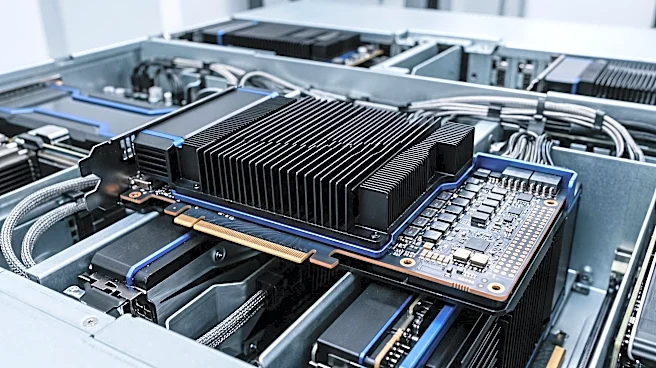

In the world of AI research, there is a massive gap between a polished paper and a running GPU cluster. Theoretical elegance often hits a wall of messy reality.
The Paper vs. The Lab
If you have ever spent a late night staring at a loss curve that refuses to move, you know
the frustration. In academic papers, machine learning breakthroughs like BYOL (Bootstrap Your Own Latent) are presented as clean, inevitable successes. The math works, the architecture is sound, and the results look like a steady climb toward perfection. But when you move from the controlled environment of a research paper to the chaotic reality of actual training, things get complicated. The gap between a theoretical proof and a practical implementation is where most AI dreams go to die, and understanding why is the difference between a successful deployment and a wasted budget.
The Problem of Training Instability
One of the biggest reasons why models behave differently in practice is the sheer instability of modern training techniques. Take on-policy distillation, for example. On paper, it is a brilliant way for a student model to learn from a teacher model by using its own generated data. However, in practice, this can lead to what researchers call spurious agreement. This is a phenomenon where the student model starts mimicking the teacher so closely at certain points that it becomes stuck in a loop, producing repetitive, nonsensical, or excessively long responses. The student isn't actually learning the underlying logic; it is just learning to copy the teacher's surface-level patterns, leading to a massive degradation in performance that the original paper never predicted.
The Curse of Hyperparameter Sensitivity
In a research paper, hyperparameters like learning rates or dropout levels are often treated as fixed constants that have been 'found.' In the real world, these are moving targets. A major reason why practical training deviates from theory is the extreme sensitivity of these variables. A paper might suggest a specific learning rate works perfectly, but in a real-world setting, that same rate might cause the model to diverge instantly because of how it interacts with other parameters. This is the 'curse of dimensionality' in action. When you try to tune multiple variables at once, the complexity doesn't just add up; it multiplies. A slight shift in one dimension can completely invalidate the progress made in another, making the smooth curves seen in papers look like jagged mountains in practice.
The Computational Reality Check
Finally, we have to talk about the cost. Theoretical models assume you have infinite time and compute to find the optimal path. In practice, every single training run is a massive investment of electricity, hardware, and time. Researchers often use grid search to find the best settings, but this is incredibly inefficient. Grid search treats every parameter as equally important, wasting huge amounts of GPU time exploring unimportant dimensions while missing the high-impact shifts that actually drive performance. When you are burning through thousands of dollars in compute, you cannot afford the luxury of the brute-force methods often implied by theoretical frameworks. This pressure to be efficient forces engineers to make compromises that the original authors of a paper likely never had to consider.