









The People's IPO
Remember 2021? After a year of lockdowns, stimulus checks, and the GameStop saga, retail investing was the hottest new national pastime. At the center of it all was Robinhood, the commission-free trading app with a sleek interface and a mission to “democratize
finance for all.” When it went public in July 2021 under the ticker HOOD, it felt like a coronation. The company even allocated a huge chunk of its IPO shares to its own users—an unprecedented move. Wall Street was broadly optimistic. While some analysts cautioned that the valuation was steep, the consensus narrative was one of explosive growth. Robinhood had captured the zeitgeist and the wallets of a new generation. With tens of millions of funded accounts and a dominant brand, the bull case seemed simple: as long as people were trading, Robinhood would win. Price targets from major banks reflected this belief, with many seeing significant upside from its $38 IPO price.
The Hype Was a Sugar High
The problem was that the pandemic-era trading frenzy wasn't a new normal; it was a perfect, unrepeatable storm. Beneath the surface of staggering user growth, Robinhood’s business had serious dependencies that many chose to overlook. A huge portion of its revenue came from a highly volatile source: payment for order flow (PFOF) on options and cryptocurrency trades. In the second quarter of 2021, a staggering amount of its crypto revenue came from one asset alone: Dogecoin. This wasn't a diversified, stable business—it was a company riding a very specific, and very wild, wave. When the wave crested, the business would be left on the beach. Furthermore, the very user base that fueled its rise was fickle. They were drawn by novelty and momentum. When the market stopped delivering easy, meme-driven gains, many simply lost interest or moved on.
The Unraveling
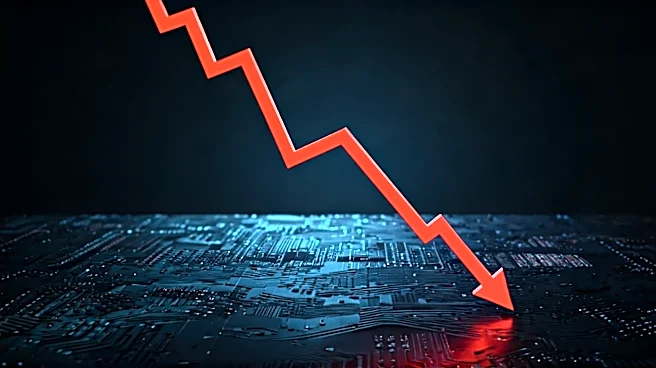
The “crash” wasn't a single Black Monday-style event. It was a slow, agonizing bleed that began just weeks after the IPO. After a brief, meme-fueled spike to over $85, reality set in. Robinhood's first few earnings reports as a public company were disastrous. The numbers told a story that directly contradicted the pre-IPO hype. Monthly active users were falling. Trading volumes were plummeting. Average revenue per user was shrinking. The world was reopening, government stimulus had ended, and people were spending their time and money on things other than trading crypto on their phones. Every quarter, the company’s executives had to explain why growth had not only stalled but reversed. The stock responded accordingly, sliding from the $40s to the $30s, then the $20s, and eventually cratering in the single digits—a catastrophic destruction of more than 80% of its value in less than a year.
When the Analysts Gave Up
This is the part “Wall Street said couldn’t happen.” It’s not that analysts didn’t see risks, but few predicted the sheer speed and scale of the collapse. For months, you could watch the cognitive dissonance play out in real time. As the stock fell, many analysts maintained “Buy” ratings, arguing it was undervalued relative to its former glory. They were modeling a return to growth that was never coming. But one by one, they were forced to capitulate. Price targets were slashed from $50 or $60 all the way down to the low teens. Cathie Wood's ARK Invest, once a major believer, famously dumped its entire position. The narrative had completely inverted. Robinhood went from being the future of finance to a cautionary tale about a product that was mistaken for a durable business, a company whose fortunes were inextricably tied to a fleeting cultural moment.