




The Graphics Card: Your Budget's Center of Gravity
Let's get this out of the way: the graphics processing unit (GPU) is the single most important and expensive component in a gaming PC. In a $1,500 build, it's not uncommon for the GPU to consume $400 to $650 of the budget, sometimes representing 40% or more
of the total cost. This part is responsible for rendering the stunning visuals, high resolutions, and smooth frame rates you crave. In 2026, the demand for advanced features like real-time ray tracing and AI-driven performance boosts from technologies like DLSS has made GPUs incredibly complex. Furthermore, the immense demand for these same chips in the artificial intelligence sector reduces the supply for gamers, driving prices higher. This competition for manufacturing capacity means first-time builders are often shocked to find that their dream GPU costs as much as a pre-built console.
The CPU and Motherboard: A Critical Balancing Act
After the GPU, the central processing unit (CPU) is the next major decision. While a mid-range CPU (around $175-$300) is plenty for most gaming needs, the surprise comes from the need to pair it with an equally capable motherboard. It’s tempting to save money by picking the cheapest motherboard your chosen CPU fits into, but this is a classic rookie mistake. A quality motherboard ensures stable power delivery, provides faster connectivity for storage and peripherals, and offers a clear upgrade path for the future. Cheaping out here can lead to performance bottlenecks where your powerful CPU is held back, or you find yourself needing a whole new board just to add a faster drive later on. A well-matched motherboard and CPU combination, costing between $350 and $500 total, forms the reliable foundation of your entire system.
RAM and Storage: The Surprisingly Steep Costs
Just a few years ago, RAM and storage were affordable afterthoughts. In 2026, they have become a significant expense that often catches builders off guard. Prices for high-speed DDR5 RAM and fast NVMe solid-state drives (SSDs) have risen dramatically, partly due to the same supply pressures affecting GPUs. A 16GB kit of decent DDR5 RAM can now cost over $200, with 32GB kits pushing past $500 in some cases. Similarly, a speedy 1TB NVMe SSD, which is essential for fast game load times, can add another $160 to $190 to the bill. First-timers often budget based on older, cheaper standards, and are surprised to find that these two "minor" components can add up to nearly the cost of their graphics card.
The Supporting Cast You Can't Ignore
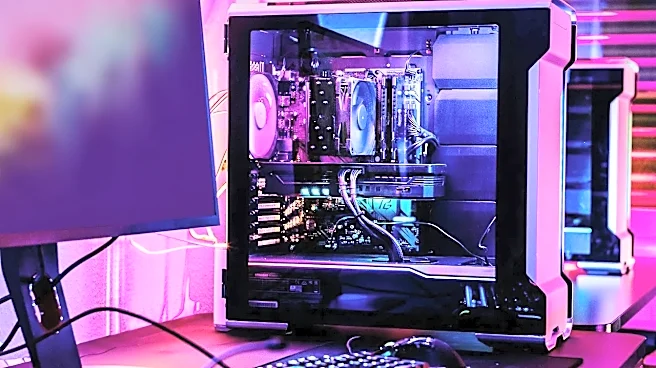
The final pieces of the puzzle are the power supply unit (PSU), case, and CPU cooler. These are the components first-time builders are most likely to skimp on, and it's a huge mistake. A cheap, unrated power supply is a risk to your entire system; a quality 750W Gold-rated PSU from a reputable brand is a non-negotiable $90-$125 investment that protects your expensive components. Likewise, a case isn't just a box; a good one provides the airflow necessary to keep your parts from overheating, which is crucial for performance and longevity. Finally, while some CPUs come with a stock cooler, a modest $35-$75 aftermarket air cooler can run quieter and keep temperatures lower, ensuring your processor delivers its full performance.
The Hidden Costs Outside the Tower
The final surprise is that the budget for the PC tower itself is often just the beginning. A new rig is useless without an operating system, and a legitimate Windows 11 license will set you back about $130. Then come the peripherals. If you're coming from a laptop or an older system, you'll need a monitor capable of displaying the high frame rates your new PC can produce, which can easily cost $200 or more. A quality mechanical keyboard and gaming mouse can add another $150-$200. Suddenly, your $1,500 PC build is part of a total $2,000+ setup. These "hidden" costs are what truly separates the sticker price of the components from the real-world price of a complete gaming station.