



The Fortress Apple Built on Privacy
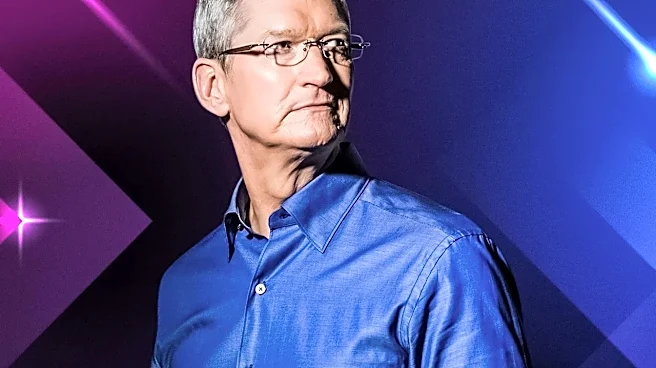
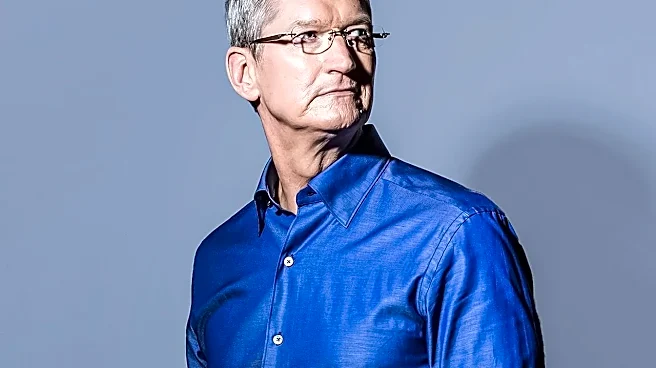
For years, Tim Cook has positioned Apple not just as a hardware maker, but as a guardian of your digital life. While competitors like Google and Meta built empires on harvesting user data for advertising, Apple took a different path. Cook has repeatedly
called privacy a “fundamental human right.” This wasn't just talk; it was a core business strategy. The company makes money selling premium devices, not selling you. This stance was most famously demonstrated in its public battle with the FBI over unlocking an iPhone and, more recently, with the rollout of App Tracking Transparency (ATT). Introduced in 2021, ATT forced apps to ask for permission before tracking users across other apps and websites, a move that delighted privacy advocates and decimated the business models of companies like Meta. It was a power play that cemented Apple's image as the privacy-conscious choice.
The AI Wrecking Ball
Then, generative AI exploded. The entire tech industry pivoted toward building smarter, more capable artificial intelligence that could write emails, create images, and act as a personal assistant. The problem? The most powerful AI models are data-hungry. They run in the cloud, on massive servers, and get smarter by processing enormous amounts of information. This creates a fundamental conflict with Apple’s privacy-first approach. How can Apple compete with the increasingly powerful AI features from Google and others if its core philosophy prevents it from using customer data in the same way? Sending your personal requests, photos, and documents to a server for processing is precisely the kind of “surveillance” that Cook has criticized for years. This is the tightrope Apple must walk at the iPhone 18 event: delivering cutting-edge AI without dismantling the privacy fortress it so carefully constructed.
On-Device Smarts vs. The Powerful Cloud
Apple's answer to this dilemma has been a hybrid strategy centered on on-device processing. The idea is to make the iPhone itself powerful enough to handle most AI tasks locally, so your data never has to leave your hand. This is faster, more secure, and perfectly aligned with its privacy brand. But there are limits. For more complex requests, even the most advanced iPhone chip isn't enough. That’s where Apple introduced “Private Cloud Compute,” a system designed to handle more demanding AI tasks on dedicated Apple-silicon servers. The company insists that this cloud is built with privacy at its core, claiming that data is never stored or made accessible to Apple itself. However, this is a nuanced message that's harder to communicate than the simple promise that “what happens on your iPhone, stays on your iPhone.” The challenge is convincing users that this private cloud is just as trustworthy as the device in their pocket.
What to Watch for on Stage
When Apple executives take the stage, don’t just watch for new features; listen to how they talk about them. The language will be revealing. Expect to hear terms like “personal intelligence” instead of “artificial intelligence,” framing the technology as an extension of the user, not a separate entity. Pay attention to which features are highlighted as running “entirely on-device.” For any features that use the cloud, look for heavy emphasis on the security and privacy of Private Cloud Compute. Any potential partnerships with other AI companies, like OpenAI or Google, will be framed carefully, likely with user consent required for every interaction. The presentation won't just be selling a new phone; it will be a carefully crafted argument meant to reassure customers that Apple hasn't abandoned its principles in the race for AI dominance.