




The ‘Digital Neighborhood Watch’ Explained
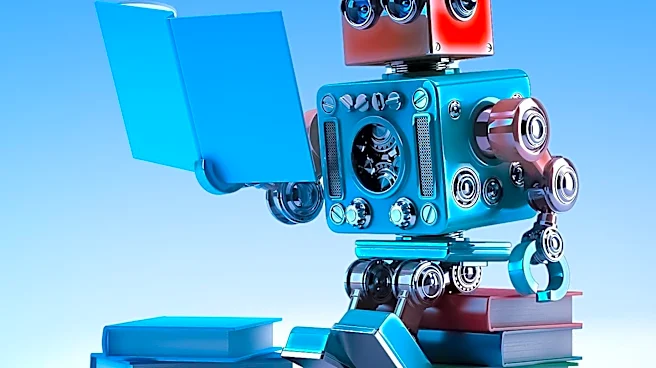
Imagine you move to a new town and want to guess your home’s value. You’d likely look at the recent sale prices of the three or five houses closest to you. That’s the core idea behind k-Nearest Neighbors. It’s a 'lazy learner' algorithm, meaning it doesn't
build a complex model beforehand. Instead, it stores a dataset of known examples—like houses with known prices or customers with known preferences. When a new, unknown data point appears, KNN looks at its 'k' closest neighbors (where 'k' is a number you choose, like 3 or 5) and makes a prediction based on them. For a classification task (like 'Is this email spam or not?'), it takes a majority vote from the neighbors. For a regression task (like 'What is this house worth?'), it averages their values. Its power lies in this simplicity: it assumes things that are similar should behave similarly.
From Streaming Queues to Fraud Alerts
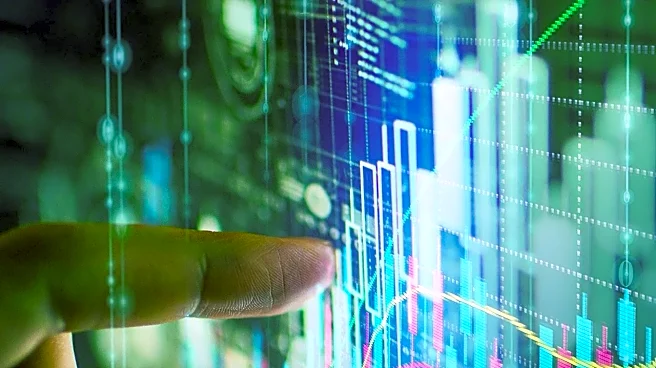
So, what does this actually predict? Not lottery numbers, but powerful classifications and estimations that already shape our world. The most common application is in recommendation engines. When services like Netflix or Amazon suggest what you should watch or buy next, they're often using a KNN-like logic. They find users with similar tastes to you (your 'neighbors') and recommend things those users liked. It’s also a workhorse in finance, used for everything from credit scoring and predicting stock market movements to detecting fraudulent credit card activity by spotting transactions that don't fit a user's typical 'neighborhood' of spending. In healthcare, it can help identify risk factors for diseases by comparing a patient's clinical data to similar patients in a database. It can even be used in agriculture to forecast climate patterns or predict crop yields based on historical data from similar areas.
Why Your Neighbors Aren't Always Right
Despite its strengths, KNN is no silver bullet. Its biggest weakness is what’s known as the 'curse of dimensionality'. The algorithm works well when comparing a few features, like age and income. But when you have hundreds or thousands of features (high-dimensional data), the concept of 'distance' becomes less meaningful. Every data point starts to look equally far from every other one, and the predictions become less accurate. The algorithm is also computationally expensive and memory-intensive for large datasets, because it has to compare every new point to every single existing point in its memory. Furthermore, it’s sensitive to irrelevant features and noisy data; a few bad neighbors can easily throw off the prediction. This means data quality and careful feature selection are critical for it to work well.
The Algorithm's Next Ten Years
KNN won’t be the star of every sci_fi AI breakthrough, but it will become an even more crucial, foundational building block. Its simplicity and adaptability make it a great starting point for many machine learning tasks. Over the next decade, we'll see its principles of similarity-based prediction integrated more deeply into larger, more complex systems. Think of personalized medicine, where it could help find 'digital twins' among patient data to predict treatment outcomes. Or in the Internet of Things (IoT), where it can detect anomalies in sensor data by spotting patterns that deviate from the norm. While newer, more powerful algorithms like deep learning models will handle highly complex tasks, KNN’s role as a fast, interpretable, and reliable tool for finding local patterns will remain vital. It's not about predicting the distant future, but about making smarter, faster sense of the immediate, data_rich present.