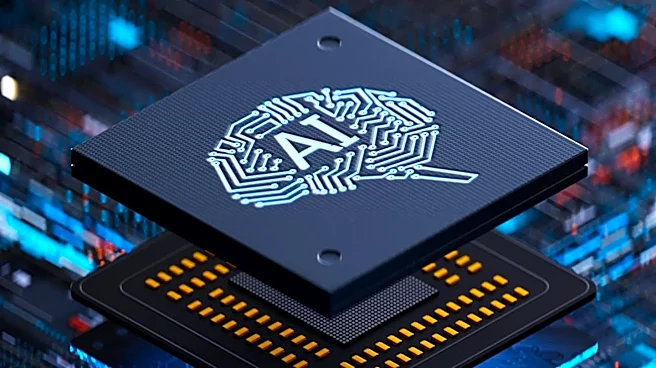







If you’ve marveled at an AI creating a stunning image or a chatbot writing a poem, you’ve seen the magic. But behind the curtain is a concept that quietly made it all possible: the 'attention mechanism'. It's the secret sauce of modern AI.
The Memory Problem AI Used to Have
Not long ago,
AI models that worked with language had a frustrating limitation. Early architectures like Recurrent Neural Networks (RNNs) processed information sequentially, like a person reading a sentence one word at a time. This created a bottleneck. By the time the model reached the end of a long paragraph, it had often 'forgotten' the crucial context from the beginning. Imagine trying to understand the sentence: 'The cat, which had been lounging all day on the warm, sunny windowsill, didn't cross the road because it was tired'. A sequential model might struggle to correctly link 'it' back to the 'cat' instead of the 'road'. This short-term memory problem was a major hurdle, preventing AI from grasping the complex, long-range relationships that define human language.
A New Way to Focus
The attention mechanism, first proposed in 2014 and refined over the years, offered a brilliant solution. Instead of forcing a model to rely on a compressed, fading memory, attention allows it to look back at the entire input at every step and decide which parts are most important right now. Think of it like a student highlighting a textbook. You don't give every word equal importance. When answering a question about a specific character, you scan the pages and focus your 'attention' on the sentences where that character appears. The attention mechanism does this mathematically. For any given word, it generates a query (what I'm looking for), and compares it to keys (labels for all the other words) to create relevance scores. These scores determine how much influence each word in the input should have on the current task, creating a weighted blend of information.
The 'Attention Is All You Need' Revolution
The true breakthrough came in 2017 when a team of Google researchers published a paper with a deceptively simple title: 'Attention Is All You Need'. This paper introduced the Transformer, a new AI architecture that did away with sequential processing entirely and relied solely on attention. By processing all words simultaneously and using a sophisticated version called 'self-attention', the Transformer could weigh the relevance of every word against every other word in the text. This had two massive benefits. First, it was dramatically better at understanding context, no matter how far apart words were. Second, because it wasn't sequential, it could be massively parallelized, allowing researchers to train much larger and more powerful models on modern hardware like GPUs. The 'T' in now-famous models like GPT (Generative Pre-trained Transformer) and BERT literally stands for Transformer.
From a Paper to a Global Phenomenon
That 2017 paper became the foundation for the generative AI explosion we see today. The Transformer architecture, powered by attention, is the engine inside large language models (LLMs) like ChatGPT, Claude, and Gemini. It allows them to write coherent essays, summarize long documents, and generate computer code. But the impact wasn't limited to text. The same principles were adapted for image generation, where models like DALL-E and Midjourney pay attention to different parts of a text prompt to construct a visual scene. It's used in music generation, scientific research, and even protein folding. The attention mechanism gave AI a flexible and scalable way to understand context and relationships within data. This seemingly small shift in focus was, in reality, a monumental leap that unlocked the capabilities we now interact with every day.