





The Colossus on Shaky Ground
By the early 2010s, Hewlett-Packard was a Silicon Valley legend that had lost its way. Founded in a Palo Alto garage in 1939, it had grown into a $110 billion behemoth with interests in everything from personal computers and printers to complex enterprise
servers and IT services. This sheer size, once a symbol of dominance, had become an anchor. The company was too large and slow to compete effectively in a rapidly changing market. Fast-moving competitors were outmaneuvering HP in growth areas like cloud computing and mobile, while its legacy businesses faced stagnation. A revolving door of CEOs and a series of costly, sometimes questionable acquisitions, like that of Compaq in 2002, had muddled its strategy and created a bureaucratic tangle that stifled innovation. The company that once defined the “HP Way” of innovation was struggling to find its path forward.
The Great Divorce: A Radical Solution
The “single strategic move” came on November 1, 2015. Under the leadership of CEO Meg Whitman, who had initially resisted the idea, HP officially split into two independent, publicly traded companies. The logic was a dramatic bet on the power of focus. One company, HP Inc., would retain the well-known PC and printer businesses, which were mature but generated significant cash flow. The other, Hewlett Packard Enterprise (HPE), would concentrate on the higher-growth, higher-margin world of enterprise products and services, including servers, storage, networking, and cloud infrastructure. Whitman argued that a single, massive company couldn't be nimble enough to win in two vastly different markets. By separating, each entity could possess the “independence, focus, financial resources, and flexibility” to adapt to its specific customer and market dynamics. It was an immense and complex undertaking, involving the separation of everything from IT systems to tax entities across 170 countries.
Life After the Split: Two Paths Emerge
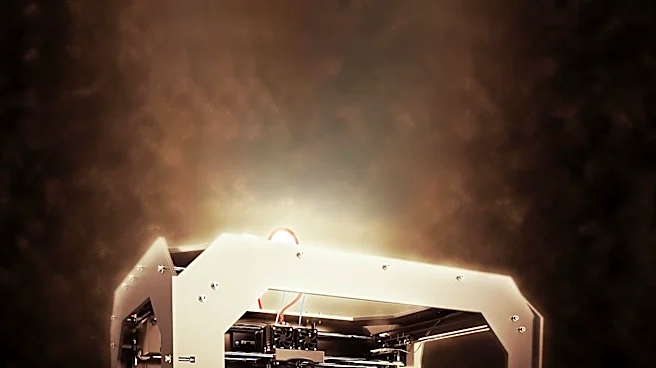
In the years following the split, the two companies embarked on divergent journeys. Initially, many analysts bet that HPE, with its focus on the lucrative enterprise market, was the heir apparent to HP's legacy of innovation, while HP Inc. was seen as managing a declining business. However, reality proved more nuanced. HP Inc., under CEO Dion Weisler, streamlined its operations and found surprising resilience and growth in the PC market, while also investing in new areas like 3D printing. HPE, meanwhile, faced fierce competition from cloud giants like Amazon Web Services and Microsoft. It continued to evolve, spinning off its enterprise services division in a deal with CSC to form DXC Technology and later its software business to Micro Focus, further sharpening its focus. More recently, HPE has seen soaring performance, with its stock surging in 2026 on the back of strong demand for its AI-related infrastructure and networking gear.
The Ripple Effect: A New Playbook for Big Tech
While the split fundamentally reshaped HP's own destiny, its broader industry impact was more as a catalyst and a proof of concept. The move didn't so much change the products competitors were selling, but it did change the strategic conversations happening in their boardrooms. At the time, Whitman predicted that other large, diversified companies would follow suit, and she was right. The HP split helped normalize the idea of the “de-merger” as a viable tool for unlocking value in legacy tech conglomerates. It provided a high-profile case study showing that in an era defined by speed and specialization, breaking up could be a more effective strategy than bulking up through acquisitions. Other giants, facing similar pressures, took note. The move can be seen as part of a broader trend where massive, unwieldy tech firms sought greater agility, a path also taken in different ways by companies like Dell, which went private to restructure away from public market pressures.