







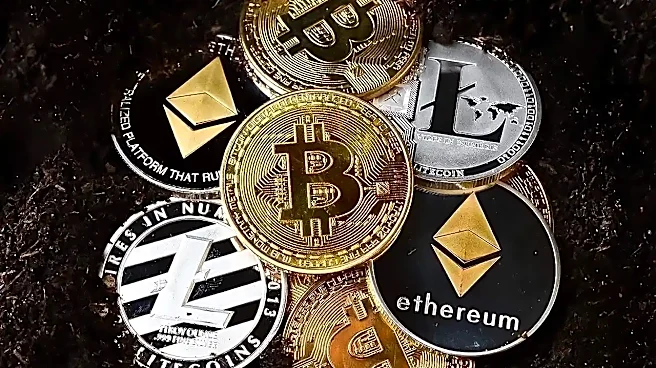

DeFi’s Wild, Experimental Youth
Decentralized Finance, or DeFi, emerged on blockchains like Ethereum with a revolutionary promise: to build an open, permissionless financial system without banks or brokers. It sparked a wave of innovation, creating decentralized exchanges, lending platforms,
and complex yield-generating strategies. However, this period was also defined by high risks, volatility, and complexity. For many, DeFi was a world of confusing acronyms, unaudited smart contracts, and a constant chase for unsustainable yields. Its separation from Bitcoin, the industry's most recognized and valuable asset, was a defining feature. Bitcoin was seen as digital gold—a store of value—while DeFi was the freewheeling financial frontier built on more programmable blockchains.
The First Bridge: Wrapped Bitcoin
The first major step in bridging this divide came with a simple but powerful invention: Wrapped Bitcoin (wBTC). Essentially, wBTC is an Ethereum-based token that is backed 1:1 by actual Bitcoin held in a secure custodian. This innovation acted like a passport, allowing Bitcoin's immense value and liquidity to travel into the DeFi ecosystem for the first time. Suddenly, BTC holders could use their assets as collateral to borrow funds, provide liquidity to trading pools, or engage in other financial strategies without having to sell their Bitcoin. It was a game-changer, injecting billions of dollars of the market's most trusted asset into DeFi, making these platforms more robust and efficient. However, this solution came with a trade-off: it required trusting a centralized custodian to hold the underlying Bitcoin, which went against DeFi's core ethos of decentralization.
A Return to the Source: Building on Bitcoin
While wBTC brought Bitcoin's value to other chains, a more profound shift is now underway: building DeFi applications directly on top of Bitcoin itself. This is happening through "Layer 2" solutions—protocols built to extend Bitcoin's functionality without changing its core code. Projects like Stacks, Rootstock, and others are creating platforms for smart contracts, lending, and trading that are anchored to the security of the Bitcoin blockchain. The goal is to get the best of both worlds: the advanced financial applications of DeFi combined with the unmatched security and decentralization of Bitcoin. The recent Taproot upgrade to Bitcoin's code also expanded its capabilities for more complex smart contracts, further paving the way for this new wave of "Bitcoin DeFi" or BTCFi.
Why This 'Boring' Shift Matters
This move toward integrating Bitcoin's basics—its security, scarcity, and role as a reserve asset—signals a maturation of the DeFi space. After a phase of high-risk experimentation, the industry is increasingly prioritizing stability and trust. By building on or integrating with Bitcoin, DeFi protocols can tap into the deepest pool of liquidity and the most battle-tested security in the digital asset world. This doesn't mean DeFi's innovative spirit is gone. Instead, it's being tempered with the principles that made Bitcoin successful in the first place. For investors and users, this could mean a more stable, secure, and ultimately more useful decentralized financial system—one that leverages the strengths of the entire crypto ecosystem instead of remaining in isolated silos. It's a quiet evolution, but one that could define the future of finance on the blockchain.