



The Race for the Final Frontier of Internet
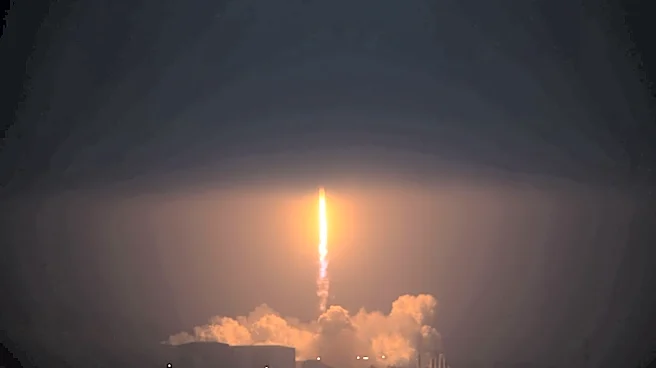
The battle for low-Earth orbit (LEO) is one of the defining tech stories of this decade. Companies like SpaceX, with its well-established Starlink service, and Amazon, with its rapidly deploying Project Kuiper, are launching thousands of satellites to provide
high-speed, low-latency internet to every corner of the planet. For years, the narrative has been dominated by launch schedules and the sheer size of the constellations. Amazon plans to deploy a fleet of over 3,200 satellites. While this is an impressive feat of manufacturing and logistics, it's just the table stakes in this high-stakes game. The real differentiator for Kuiper, the one that shapes its entire strategy and potential, is a foundational piece of technology that makes its network function fundamentally differently: a fully interconnected space-based mesh.
The Secret Sauce: Lasers in the Sky
The hidden detail is this: every single satellite in the Project Kuiper constellation is equipped with multiple Optical Inter-Satellite Links (OISLs). In plain English, that means space lasers. These lasers create a mesh network in orbit, allowing each satellite to talk to several of its neighbors at incredible speeds—up to 100 Gbps. Think of it like a fiber optic network, but instead of glass cables running under the ocean, it's beams of light flashing through the vacuum of space. While competitors like Starlink have also incorporated OISLs, Amazon made the strategic decision to build them into every satellite from the very beginning of its deployment, making it a core, non-negotiable feature of its architecture. This wasn't an afterthought or an upgrade; it's the bedrock of the entire system.
Why a Laser Mesh Changes Everything
So, why does this matter? The OISL mesh network provides three game-changing advantages. First, it dramatically reduces the need for ground stations. In a traditional 'bent-pipe' satellite system, a satellite must be in direct line-of-sight with a ground station to route internet traffic. With OISLs, data can hop from satellite to satellite across oceans or continents until it finds one directly over a ground station. This creates a more efficient and resilient global network.Second, it can actually be faster than terrestrial fiber for long-distance data transmission. Light travels about 30% faster through the vacuum of space than it does through glass fiber optic cables. By routing traffic through the orbital mesh, Kuiper can potentially offer lower latency for intercontinental data transfers. Finally, it enhances security. A closed-loop laser mesh is inherently more difficult to intercept or jam than traditional RF signals broadcast from the ground, a feature of particular interest to government and enterprise customers.
An Ambitious and Expensive Bet
Committing to a full OISL mesh from day one is an enormous engineering and financial gamble. The technology is incredibly complex; successfully pointing a laser beam across a thousand kilometers to hit a moving target traveling at 17,000 miles per hour is a monumental challenge. It’s a key reason why the detail is often glossed over—the technical difficulty and upfront cost are immense. By contrast, early generations of Starlink's constellation did not feature OISLs, with the capability being added and scaled over time.Amazon's all-in approach is a bet that the long-term benefits of a more resilient, faster, and less ground-dependent network will outweigh the initial complexity and cost. It's a strategic choice that leverages Amazon's deep pockets and its powerful AWS cloud infrastructure, which is tightly integrated with the Kuiper ground network. This vertical integration, from the custom 'Prometheus' chips in the satellites to the ground stations connected to AWS, gives Amazon a unique level of control over its entire network.