



More Than Just a Phone Launch
For the community dubbed "AI Twitter," the annual iPhone keynote has become one of the most important events of the year. It's not about the phone itself, but what the phone's new hardware implies about the future of Apple's artificial intelligence ambitions.
After years of watching Siri fall behind more capable rivals like Google's Gemini and OpenAI's various models, this community is looking for one thing: proof that Apple is finally getting serious. Every mention of a new Neural Engine, every slide detailing processor architecture, and every percentage point increase in machine learning performance is a clue. They aren't just specs; they are signals of intent.
The Long Shadow of Siri's Past
To understand the anticipation, you have to understand the frustration. Siri was a pioneer, introducing the world to the idea of a voice assistant in 2011. But in the years since, it has been lapped by the competition. While other assistants became conversational and deeply knowledgeable, Siri often felt stuck, limited to setting timers and checking the weather. The explosion of generative AI with models like ChatGPT only widened this gap, making Siri feel antiquated. Apple has made incremental updates under the banner of "Apple Intelligence," but has faced criticism for delays and features that felt more evolutionary than revolutionary. This history of unfulfilled potential is why the AI world watches so intently, hoping this is the year Apple finally delivers a true overhaul.
Why Hardware is the Real Clue
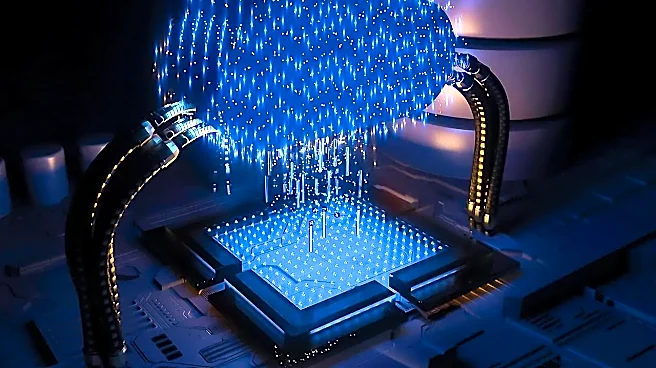
The core of the issue, and the reason for the focus on hardware, comes down to Apple's fundamental approach: privacy. While competitors built their AI in the cloud, processing user data on massive servers, Apple has always prioritized on-device processing. This method is faster, works offline, and keeps personal data from ever leaving the phone. But it comes with a huge constraint: it requires incredibly powerful and specialized chips. Truly advanced AI, with the kind of reasoning and multi-step task capabilities seen in modern models, needs a powerful Neural Engine and ample memory. That's why the technical specifications of the iPhone 18's new chip are the most important part of the announcement. If the chip isn't a significant leap forward, a revolutionary new Siri is likely off the table for another year.
What AI Twitter is Listening For
The experts will be parsing every word from Apple's executives. They're listening for specific phrases that go beyond marketing fluff. Is Siri described as just "smarter," or is it an "entirely new version" built on new "foundation models"? They'll be watching demos closely for signs of true agent-like behavior: can Siri understand on-screen context, perform actions across multiple apps, and handle complex, multi-step requests without needing to be prompted at every stage? Any mention of partnerships, such as the rumored integration of Google's Gemini models to handle more complex cloud-based queries, will also be heavily scrutinized. This isn't about a single feature; it's about seeing evidence of a new, deeply integrated AI architecture.
Playing Catch-Up or a New Game?
Ultimately, the question is whether Apple is simply trying to make Siri as good as its rivals or if it's playing a different game entirely. The company's strength has never been in having the most powerful standalone AI model, but in the seamless integration of hardware, software, and services. A truly intelligent Siri, running privately and efficiently on-device and woven through the entire Apple ecosystem—from the iPhone to the Watch to the Mac—could offer a user experience that cloud-based competitors can't easily replicate. The iPhone 18 event, therefore, is more than a product launch. It's a test of that strategy and a potential turning point that could redefine Apple's role in the AI race for years to come.