







What Even Is an 'AI Agent'?
Forget just asking your phone for the weather. The new frontier is on-device AI agents—proactive, intelligent software that anticipates your needs. Think of an assistant that doesn't just react to commands but takes initiative. These agents, like Google's
own Gemini, aim to handle complex tasks locally on the phone, without constantly needing the cloud. They can summarize your unread emails, draft a reply, book a dinner reservation based on a group chat, and even make the phone call for you. For tech enthusiasts and 'power users,' this is the future: a phone that works for you, often in the background, making life more efficient. This is the crowd that gets excited by dedicated AI hardware like Google's Tensor chips, which are designed specifically for these kinds of complex computations.
The Never-Ending Quest for More Juice
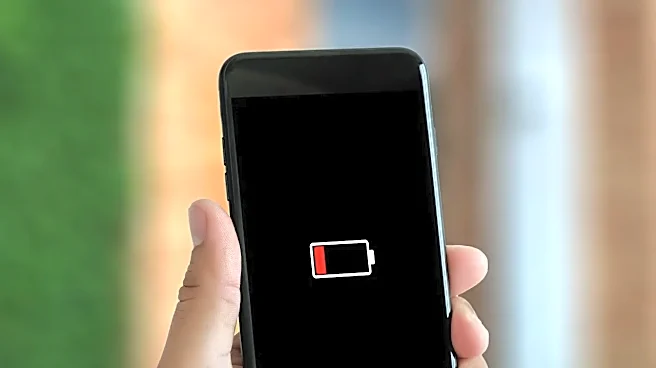
For the vast majority of smartphone buyers, however, the hierarchy of needs is far more straightforward. Before any gee-whiz features, the phone simply has to last through the day. Multiple recent surveys confirm that battery life has become the single most important feature for consumers when purchasing a new phone, even outranking price. This isn't surprising. A phone loaded with incredible AI is useless if it’s dead by 3 p.m. As phones have become central to our lives for work, communication, and entertainment, the anxiety of a draining battery is a universal pain point. This constant background activity, from 5G to health tracking, puts sustained pressure on batteries. Users don't want to be tethered to a charger or carry a power bank; they just want reliability.
The Inescapable Trade-Off
Herein lies Google's central dilemma with the Pixel 11. The very thing that power users crave—powerful, always-on AI processing—is a direct threat to what mainstream buyers demand. Running complex AI models requires significant computational power, which in turn consumes a lot of energy. While AI can be used to optimize battery life by learning user habits and managing background tasks, the new wave of generative AI agents represents a net increase in power consumption. Running these advanced features can cause the phone's chip to heat up and drain the battery much faster, especially during prolonged use. Some reports on the Pixel 11 already highlight this tension, with demanding AI workloads exposing the hardware's limits and impacting battery endurance. This creates a fundamental trade-off: every ounce of processing power dedicated to making the AI smarter is an ounce that could have been saved to extend battery life.
How Google Could Thread the Needle
So, how can Google serve two masters? The solution likely involves a combination of hardware efficiency and software intelligence. The company's custom Tensor chips are the first piece of the puzzle, designed to handle AI tasks more efficiently than a general-purpose processor. The next step is smarter software. This means mastering the art of workload distribution: deciding which AI tasks are simple enough to run on-device and which heavier tasks should be sent to the cloud. It also means using AI to aggressively manage power consumption elsewhere. For example, Google is already rolling out AI-powered summaries to explain what's draining your battery. Another strategy is product segmentation. We may see the most advanced, power-hungry AI agents reserved for the high-end "Pro" models, while the standard Pixel 11 focuses on delivering a more balanced experience with exceptional battery life. This allows Google to push the boundaries for enthusiasts without alienating the millions of customers whose top priority is making it to bedtime with charge to spare.