





1. Demis Hassabis: The Game Theorist
John von Neumann co-authored the foundational text of game theory, analyzing strategic decision-making. Demis Hassabis, co-founder and CEO of Google DeepMind, has made a career of putting that theory into practice at a staggering scale. Hassabis, a former
chess prodigy and video game designer, approaches artificial intelligence not just as a computer science problem, but as a game to be mastered. This philosophy powered AlphaGo, the AI that famously defeated the world's top Go champion using moves that defied human intuition. It was a von Neumann-esque moment: using a formal system to uncover novel strategies in a complex, competitive environment. Hassabis then pointed this game-playing intelligence at one of biology's grand challenges: protein folding. The resulting AlphaFold system solved a 50-year-old problem, demonstrating how the principles of strategic problem-solving, once confined to game boards, could be used to decode the building blocks of life itself.
2. Elon Musk: The First-Principles Engineer
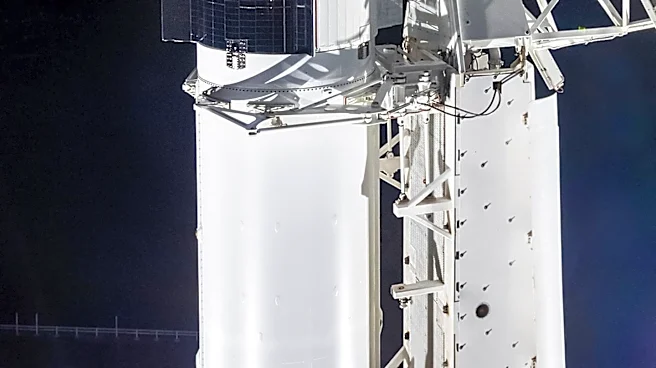
Von Neumann possessed an almost alien ability to ignore conventional wisdom and rebuild problems from their constituent parts. This method, known as first-principles thinking, is the explicit operating system of Elon Musk. While others saw rockets as impossibly expensive, Musk asked a more fundamental question: what are rockets made of? He discovered the raw materials cost only a tiny fraction of the final price, leading him to found SpaceX with the audacious goal of building rockets from scratch. This wasn't about making existing rockets cheaper; it was about reinventing the entire economic and physical model of spaceflight. He applied the same logic to electric vehicles, breaking down the components of a battery pack to their elemental costs to prove affordable EVs were possible. This relentless drive to deconstruct a problem to its core truths and reason up from there—ignoring the noise of what others believe is possible—is a direct intellectual inheritance of the von Neumann style.
3. Jensen Huang: The Foundational Platform Builder
The von Neumann architecture—the design principle that data and program instructions can be stored in the same memory—is the bedrock of virtually every computer today. It’s a foundational layer upon which decades of innovation have been built. Jensen Huang, founder and CEO of NVIDIA, shares this focus on building the fundamental platform. He didn't just build a better graphics card; he took a massive risk by making the GPU a programmable, general-purpose computing engine. This pivot transformed a niche gaming product into the essential hardware for the AI revolution. Huang talks about AI as a massive infrastructure buildout, a new computing platform that will transform every industry. Like von Neumann, he isn't just operating within the current system; he's building the next one, creating the tools and architecture—the new digital bedrock—that will enable a future he clearly sees. His vision is not just about a single product, but about enabling an entire ecosystem of innovation.
4. Sam Altman: The Strategic Orchestrator
Von Neumann was more than a lone genius; he was a master orchestrator of talent and resources, most notably during the Manhattan Project. He understood how to align brilliant minds and massive institutional power toward a single, world-changing goal. Sam Altman, as the former president of Y Combinator and now the CEO of OpenAI, operates with a similar strategic vision. At YC, he wasn't just funding startups; he was building an ecosystem and a playbook for innovation at scale. At OpenAI, he has strategically marshaled unprecedented levels of capital and computing power, making massive, non-consensus bets on the future of AI development long before it was obvious. His recent moves, like offering millions in compute credits to startups for equity, show a von Neumann-like understanding of how to use resources to shape an entire industry, locking emerging companies into his platform and accelerating the future he wants to see. It's a grand, strategic game of assembling the pieces—people, capital, and compute—to solve the most ambitious problem he can find.
5. Palmer Luckey: The Pragmatic Disruptor
While known for his theoretical brilliance, von Neumann was also deeply pragmatic, applying his mind to the most urgent and messy problems of his time, especially in national defense and military technology during World War II and the Cold War. Palmer Luckey, founder of Oculus and now the defense-tech company Anduril Industries, embodies a similar brand of aggressive, results-oriented pragmatism. After disrupting the consumer world with virtual reality, he turned his attention to what he saw as a stagnant and inefficient defense industry. Anduril's mission is to bring the speed and software-centric approach of Silicon Valley to military hardware, using AI and autonomous systems. Like von Neumann, who moved from abstract mathematics to the tangible physics of implosion lenses for the atomic bomb, Luckey has moved from digital worlds to building real-world autonomous drones and surveillance systems for the U.S. and its allies. He is focused on applying advanced technology to the sharp end of geopolitical competition, a modern echo of von Neumann’s own wartime pivot.