





The Company at the Center of Everything
For decades, Nvidia was primarily known in households as the company that made the powerful graphics cards, or GPUs, that rendered stunning worlds in video games. But the same parallel processing power that brings virtual battlefields to life turned out
to be the perfect engine for the artificial intelligence revolution. This dual dominance has placed Nvidia at the nexus of technology and finance. Its latest earnings report on November 17, 2026, was no different, beating analyst expectations with a staggering $115.8 billion in quarterly revenue. The results provided a crucial health check not just on the company, which is navigating a shocking leadership change, but on the entire AI industry's momentum.
For Gamers: The AI Engine Funds Your Fun
While the spotlight often shines on Nvidia's Data Center division, which pulled in $107.6 billion this quarter, gamers have a direct stake in that success. The colossal profits generated by selling high-powered chips for AI are what fund the massive research and development budgets for the GeForce GPUs that gamers covet. Technologies like DLSS, which uses AI to boost frame rates, and photorealistic ray tracing are born from this financial engine. The company's 'Edge Computing' division, which includes gaming, still posted a healthy $8.2 billion in revenue. This quarter also saw the launch of DLSS 5, bringing even more advanced AI-powered graphics to new games. So, when AI cloud providers and enterprises buy Nvidia's hardware by the truckload, they are indirectly funding the next leap in gaming performance. The downside? That same demand can create supply constraints and keep consumer card prices high, a dynamic every PC builder knows well.
For AI Fans: The Indisputable Hardware King
For anyone building, using, or just fascinated by artificial intelligence, Nvidia isn't just a supplier; it's the foundational platform. The company’s CUDA software ecosystem has created a deep moat, making it the default choice for developers and researchers. This quarter's earnings confirmed that the thirst for AI compute is far from quenched. Data Center revenue was up 110% from the previous year, a figure that reflects the insatiable demand from cloud giants and AI startups to train and run increasingly complex models. The report highlighted the historic ramp-up of its new 'Vera Rubin' AI platform, which is already being shipped to major partners like Google Cloud and Microsoft Azure. Even amid concerns about a broader AI spending slowdown, Nvidia's results suggest that for the most critical AI workloads, its hardware remains essential.
For Stock Watchers: A Bellwether for Tech
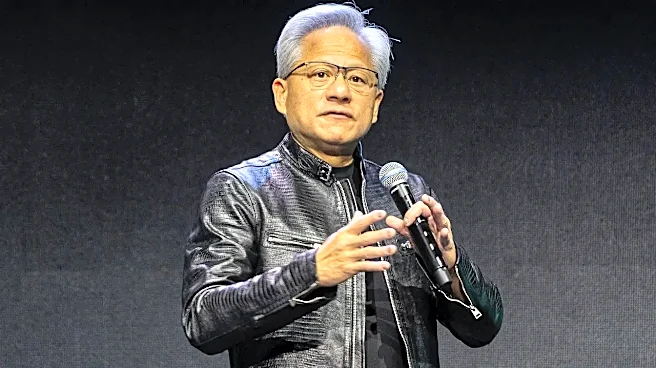
For years, Nvidia's stock has been a rocket ship, becoming the first company to top a $5 trillion market cap in 2025 thanks to its central role in the AI boom. Its financial reports are now seen as a crucial bellwether for the entire tech sector. A strong report can lift the market, while any sign of weakness can trigger widespread concern. This quarter's results were particularly vital, as they were the first since the abrupt resignation of its iconic founder and CEO, Jensen Huang. Despite the leadership turmoil and a stock that had fallen over 14% year-to-date, the company delivered revenue and earnings that comfortably beat Wall Street estimates. The stock rose in after-hours trading following the news, providing relief to investors and signaling that the AI growth engine is still running strong, even without its original driver at the wheel.