







The Great AI Giveaway
First, let's look at the 'free' part of the equation. Meta has made waves by open-sourcing its family of large language models, known as Llama. Open-sourcing means the underlying code and 'weights'—the complex parameters that define the model's behavior—are
publicly available. Developers, researchers, and even commercial companies can download, modify, and build upon Meta's technology for free. This is a stark contrast to competitors like OpenAI (creators of ChatGPT) and Anthropic, who keep their most powerful models proprietary, accessible only through paid APIs. By releasing its models into the wild, Meta instantly created a global community of developers improving, testing, and adopting its technology. Mark Zuckerberg has argued this approach is crucial for preventing a few companies from controlling the future of AI and for ensuring the technology is developed transparently and safely.
Building the Billion-Dollar Engine Room
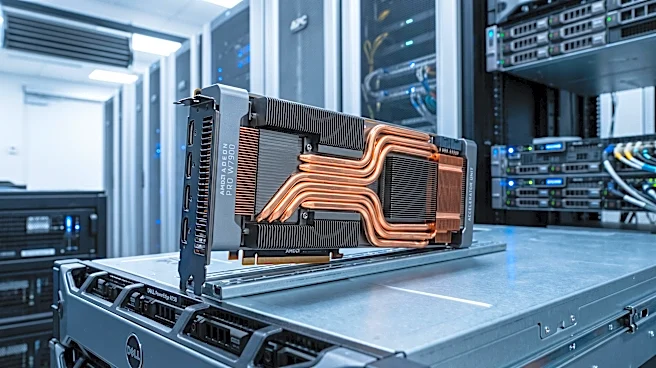
Now for the other side of the coin: the astronomical spending. Building and training frontier AI models requires almost unimaginable computing power. This means constructing massive, custom data centers and buying hundreds of thousands of specialized AI chips from companies like Nvidia. The costs are staggering. In late 2026, Meta announced plans for one of the largest equity fundraising efforts in history, aiming to secure nearly $100 billion to fund its AI infrastructure push. The company's capital expenditure forecasts for the year were set between $135 billion and $145 billion, with much of that dedicated to AI. This aggressive spending has even led to negative free cash flow for the first time in over a decade, a clear signal of how seriously Meta is taking this investment. This isn't just spending; it's an all-in bet on building the world's most powerful and efficient AI engine.
Commoditize Your Complement
So, how do these two strategies connect? It’s a classic business playbook called 'commoditize your complement'. The idea is to make a complementary product cheap or free to increase demand for your core product. Google did it with Android; by making the phone's operating system free, it ensured there would be a massive market for its real money makers: search and ads. In Meta's case, the AI model is the complement. By open-sourcing Llama, Meta is turning the AI 'brain' into a commodity, preventing rivals from selling their closed models at a premium. This shifts the entire competitive battleground. If the AI model itself is free, the new basis for competition becomes who can run it most efficiently and at the largest scale. This is precisely where Meta's billions in infrastructure spending come into play. It's building the one thing that can't be easily copied: a globe spanning, hyper efficient AI factory.
The Long Term Payoff
The endgame for Meta isn't to sell AI models. It's to own the ecosystem. If developers worldwide build their products on Llama, Meta controls the foundational layer of the next wave of technology. This provides several payoffs. First, it deeply integrates advanced AI into Meta's own products—Facebook, Instagram, WhatsApp,
and its Reality Labs hardware—making them more engaging and indispensable. Second,
it makes Meta the default platform,
attracting top AI talent and keeping the company from being locked out of the next computing era by cloud giants like Amazon and Microsoft.
Finally,
Meta does see a path to direct monetization,
but not by charging for the models.
For services like its AI agent,
'Muse',
the plan is to take a small percentage of transactions that the agent facilitates,
similar to how credit card companies take a 'take rate' on purchases.
By making the AI free,
Meta hopes to drive massive user adoption,
which in turn will generate a high volume of transactions it can profit from down the line.
It's a long term,
high risk,
but potentially transformative strategy.