





The Theranos story is more than a business failure; it's a parable about deception on a grand scale. But behind the disgraced company and its convicted founder, a series of hidden, deeply personal decisions by key players paved the road to ruin.
The Founder’s Vow: Never Admit Failure
For Elizabeth
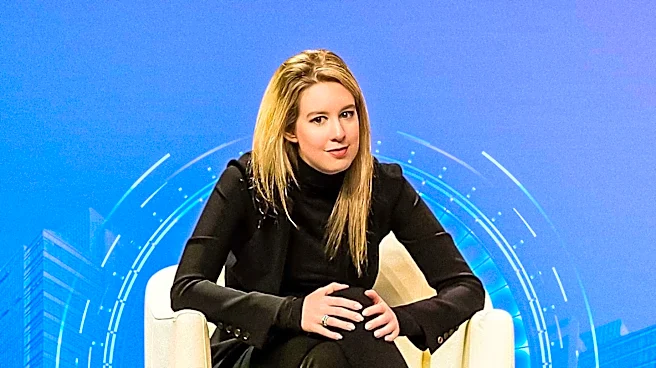
Holmes, the core decision was to never let reality derail the narrative. From the moment she founded Theranos in 2003, she wasn't just building a company; she was crafting a persona. Inspired by Silicon Valley's 'fake it 'til you make it' ethos, her hidden choice was to treat every obstacle not as a problem to be solved honestly, but as an inconvenience to be concealed. When the technology faltered, instead of pivoting or admitting delays, she decided to double down on the lie. This wasn't a single act of fraud but a continuous, daily decision to project an unwavering vision of success. She sold a story of revolutionizing healthcare, and her commitment to that story—above all else, including patient safety and scientific fact—became the engine of the entire enterprise. Her choice was to believe her own myth so fiercely that others would have no choice but to believe it, too.
The Enforcer’s Mandate: Rule by Fear
If Holmes was the visionary, her partner and company president, Ramesh 'Sunny' Balwani, was the enforcer. His pivotal decision was to build and maintain the fraudulent enterprise through intimidation, secrecy, and control. Lacking a background in science or medicine, Balwani allegedly compensated with an iron fist, creating a corporate culture of paranoia. Departments were siloed to prevent employees from connecting the dots. Those who questioned the technology or voiced concerns were belittled or fired. This atmosphere of fear was not a byproduct of his management style; it was the style itself. His decision to suppress dissent ensured that the truth about Theranos's failing technology remained contained. While Holmes sold the dream to the outside world, Balwani's mandate ensured no one on the inside could effectively challenge it.
The Believers’ Blind Spot: Trust the Story, Not the Facts
Theranos boasted one of the most illustrious boards in corporate history, including figures like George Shultz and Henry Kissinger. These powerful men, along with high-profile investors like Rupert Murdoch, made a collective, hidden decision: to invest in a charismatic founder and her story rather than performing basic due diligence. Lacking expertise in healthcare or technology, they were swayed by Holmes's confident vision and the fear of missing out on the next big thing. The board became what one journalist called 'window dressing'—a source of credibility that was never truly used for governance. They ignored red flags, such as the fact that no specialized healthcare venture capital firms were investing, and gave Holmes their stamp of approval, which in turn attracted more money and partnerships. Their decision was to be dazzled by the performance, not to look behind the curtain.
The Conscience’s Crossroads: Risk Everything for the Truth
The fraud's unraveling began with a different kind of decision. Young employees Tyler Shultz and Erika Cheung, confronted with evidence that the company was faking data and delivering faulty results, made the choice to speak out. This was not a simple decision. Shultz, the grandson of board member George Shultz, was forced to confront his own grandfather, who initially sided with Holmes. Both Cheung and Shultz faced intimidation and legal threats from Theranos. Their choice was a profound ethical one: risk their careers, reputations, and personal safety for a truth they felt the public needed to know. They decided that their professional responsibility to science and patient safety was more important than their loyalty to a corrupt company. By leaking their findings to reporter John Carreyrou, their decision to act as whistleblowers became the catalyst that brought the entire house of cards down.