









The Shape-Shifting Chip
An FPGA, or Field-Programmable Gate Array, is an integrated circuit that can be configured by a customer or designer after it's been manufactured. Think of it like a very advanced box of LEGOs. Unlike a CPU, which is a general-purpose tool, or a specialized
ASIC chip, which is like a single-purpose LEGO model that’s been glued together, an FPGA gives engineers a set of programmable logic blocks and interconnects. They can use a hardware description language (HDL) to essentially rewire the chip on a fundamental level, creating a custom digital circuit without having to fabricate a new piece of silicon for every design change. This re-programmability is its superpower.
The Processor Family Feud
To understand why an engineer would choose an FPGA, it helps to know the family. A CPU (Central Processing Unit) is a jack-of-all-trades, sequentially processing a wide variety of tasks. A GPU (Graphics Processing Unit) is a specialist in parallel work, like rendering graphics by performing the same calculation on thousands of pixels at once. An ASIC (Application-Specific Integrated Circuit) is a master of one task; it’s designed from the ground up for a single function, making it incredibly fast and efficient but completely inflexible. The FPGA sits in a unique sweet spot. It offers massive parallelism like a GPU but with the flexibility to be rewired for completely different tasks. It’s more power-efficient than a CPU or GPU for certain jobs but not as expensive to develop as a custom ASIC, making it a perfect middle ground.
Spotting an FPGA in the Wild
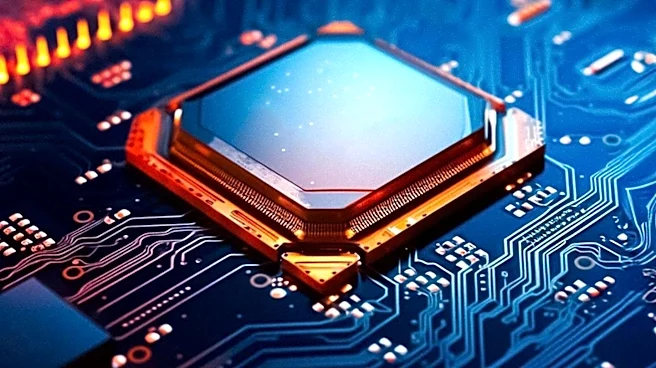
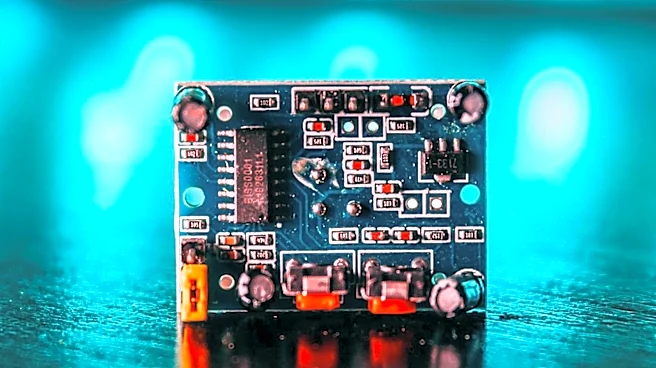
On a printed circuit board (PCB), an FPGA usually looks like a large, square black chip, often covered by a metal heat sink to keep it cool. It will typically be a Ball Grid Array (BGA) package, meaning its connections are a grid of tiny solder balls on its underside, allowing for hundreds or even thousands of connections in a compact space. You’ll see it surrounded by supporting components: dedicated power supplies, memory chips (like DDR RAM) to feed it data, and various connectors for input and output. It’s the programmable heart of a specialized subsystem on the board.
The Real Job Inside a System
In a production system, an FPGA is rarely the main brain. Instead, it acts as a powerful and highly efficient coprocessor or accelerator. Its job is to offload specific, computationally heavy tasks that would bog down the main CPU. In a Microsoft Azure data center, FPGAs accelerate networking and AI tasks, making the entire cloud faster. In 5G base stations, they perform the real-time signal processing that connects our phones. In an advanced driver-assistance system (ADAS) in a car, an FPGA might be responsible for fusing data from cameras, radar, and LiDAR sensors in real-time to detect hazards, a task requiring immense parallel processing with minimal delay.
Why Not Just Use Something Else?
The choice to use an FPGA comes down to balancing performance, cost, and flexibility. For a product like a satellite or a piece of military hardware with a long service life, the ability to update the FPGA's programming in the field is a massive advantage. For a company developing a new AI accelerator, prototyping on an FPGA is faster and cheaper than committing to a multi-million dollar ASIC design. When a task requires extreme parallelism and low latency—like processing thousands of financial transactions or high-frequency sensor data—an FPGA can outperform a general-purpose CPU by orders of magnitude while using less power. It provides the performance of custom hardware with the flexibility of software, a combination that is invaluable in today's fast-moving tech landscape.