






The Seductive, Simple Promise of Mesh
Let's start with the appeal. Mesh systems are marketed as the simple, elegant solution to Wi-Fi dead zones. Instead of one router straining to cover your whole house, you get a team of nodes that work together, blanketing your space in a single, unified
network. You can walk from the basement to the attic without your video call dropping—at least, that's the idea. The setup is usually a breeze, often guided by a friendly smartphone app. For single-story homes with standard drywall, this promise often holds true. But when you introduce a second floor, you introduce a world of physics that the slick marketing brochures tend to ignore.
The Vertical Challenge: Your House is a Fortress
Wi-Fi signals are radio waves, and they hate obstacles. In a two-story home, the biggest obstacle is the floor/ceiling assembly itself. While a signal might lose a little strength going through drywall, it loses a lot more punching through wood joists, subflooring, insulation, plumbing, and electrical wiring. If you have concrete or brick in your construction, the problem gets exponentially worse. These dense materials don't just weaken the signal; they absorb and scatter it. A signal that has to travel from a downstairs living room to an upstairs bedroom isn't just going farther—it's fighting through a physical barrier designed to be solid. This signal loss, or attenuation, is the primary reason the node in your office shows a "weak" connection to the main unit downstairs.
Hidden Villains: Metal, Glass, and Water
Beyond the basic structure, homes are filled with materials that actively sabotage Wi-Fi. Metal is the worst offender. It reflects radio waves, creating dead zones. Think about what's between your floors: HVAC ducts, plumbing pipes, and even the metal lath in older plaster walls are all potential signal killers. Even seemingly harmless things like low-E coated windows, large mirrors (which have a metallic film), and big-screen TVs can reflect and block signals. Even a large fish tank can be a problem, as water is excellent at absorbing the microwave energy used by Wi-Fi. A senior engineer might perfectly calculate a layout, only to be foiled by a hidden steel support beam or a newly installed refrigerator.
The Backhaul Bottleneck: The Network's Secret Weakness
This is the part that trips up the pros. In a wireless mesh system, the nodes need to talk to each other. This node-to-node communication is called the "backhaul." If you haven't connected your nodes with Ethernet cables, they are using valuable Wi-Fi bandwidth to talk amongst themselves. Now, imagine the upstairs node trying to get a signal through the floor. That weak connection becomes its backhaul link. Every device connected to that upstairs node—your laptop, your phone, your smart speaker—is now sharing a slow, unreliable connection back to the main router. Even if your phone shows full bars to the local node, its actual speed is limited by that weak backhaul link. This is why you can have a "strong" signal but a painfully slow connection. High-end tri-band systems have a dedicated radio for backhaul to mitigate this, but even that can struggle against bad placement and thick walls.
Solving the Puzzle: Thinking in 3D
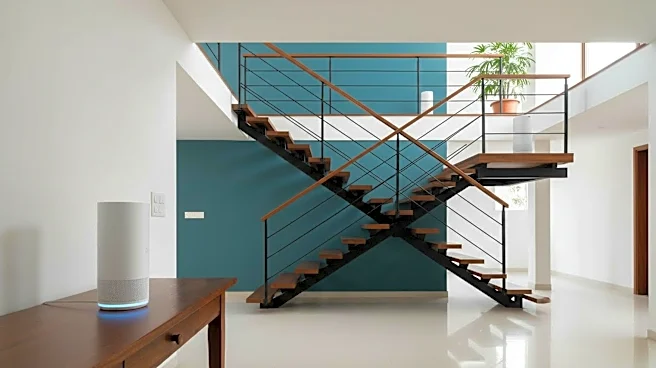
So, what’s the fix? It’s about placement and, if possible, a wired connection. The goal is to place nodes so they have a strong connection to each other, not just where you need a better signal. A common rule of thumb is to place nodes no more than two rooms apart. For a two-story house, don't place one node on the first floor and the next one directly above it on the second. Instead, stagger them. Place the upstairs node near the stairwell, giving the signal a clearer, diagonal path to the downstairs unit. The ideal spot for a router is often near the ceiling of the first floor or the floor of the second floor, to be centrally located in three dimensions. And the ultimate, gold-standard solution? Use an Ethernet cable for the backhaul. If your house has Ethernet jacks, connecting your mesh nodes with a wire eliminates all the problems of wireless backhaul, guaranteeing full speed at every node.