






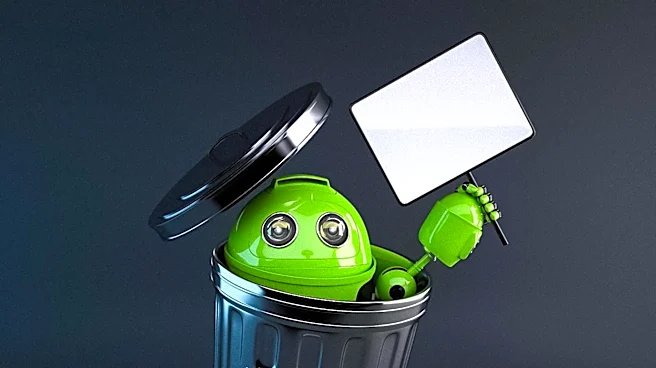
A World of Walls and Keyboards
To understand why Android mattered, you have to remember the phone world of 2008. It was a graveyard of walled gardens. Nokia’s Symbian OS was the global leader but was aging. BlackBerry, with its physical keyboards and secure email, was the undisputed
king of the corporate world. And then there was Apple’s iPhone, which had launched a year prior, rewriting the rules of user experience but creating its own tightly controlled ecosystem. Each manufacturer had its own software, and carriers had immense power over which phones and features reached consumers. It was a fragmented, restrictive landscape. The iPhone was a beautiful prison, but a prison nonetheless. For other manufacturers, competing meant either building a complex operating system from scratch or licensing an expensive and clunky one like Windows Mobile.
The Trojan Horse: An Open-Source Army
This is where Google’s strategy diverged. Instead of building one perfect phone to challenge the iPhone, Google built an army. The masterstroke was the Android Open Source Project (AOSP) and the Open Handset Alliance (OHA), a consortium of manufacturers, carriers, and chipmakers announced in 2007. The deal was simple and revolutionary: Google provided a sophisticated, modern mobile operating system for free. Manufacturers like HTC, Samsung, and Motorola could take the AOSP code, customize it, and build phones without paying licensing fees. This move completely upended the industry’s economics. Suddenly, any hardware maker could compete with the biggest players, radically lowering the barrier to entry. The T-Mobile G1 wasn't meant to be the perfect weapon; it was just the first soldier in a much larger invasion.
A Bet on Software, Not Just Hardware
While Apple’s business model was (and largely is) about selling high-margin hardware, Google’s was about services. Android was never about selling phones; it was about ensuring Google's ecosystem—Search, Maps, Gmail, and eventually, the Play Store—would have a dominant home on the next generation of computing devices. By giving the OS away, Google guaranteed that hundreds of millions of people would access the internet through a device where its services were front and center. This open strategy contrasted sharply with Apple's closed one. Apple controlled every aspect of the hardware and software to ensure a premium, consistent experience. Android's approach was messier, leading to fragmentation across different devices and versions, but it enabled incredible scale and choice. It was a bet that ubiquity and market share would ultimately be more powerful than a perfectly polished, but limited, ecosystem.
The Long Game: How the Strategy Paid Off
Initial reviews of the G1 were mixed, often calling it clunky and less intuitive than the iPhone. But the strategy wasn't about winning in 2008; it was about winning the 2010s. The open-source model worked. Manufacturers flooded the market with Android devices at every price point, from high-end flagships to budget-friendly models for emerging markets. This massive scale led to Android capturing the dominant global market share, a position it still holds today. While Apple continues to be incredibly profitable by owning the premium segment, Android’s sheer volume made it the default operating system for the majority of the world. The real victory of the 2008 launch wasn't the T-Mobile G1 itself, but the brilliant, ecosystem-first strategy that turned a free piece of software into the foundation of the modern mobile world.