







The Seduction of High-Tech Features
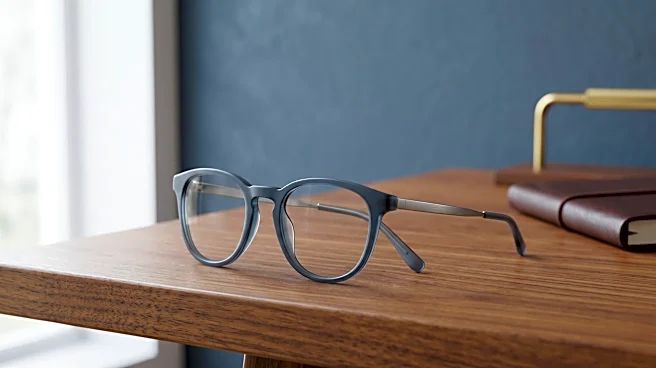
It’s easy to get lost in the marketing sizzle of modern smart glasses. Brands tout powerful cameras, hands-free AI, and brilliant in-lens displays that can act as a teleprompter or translate a menu in real time. Consumers, in turn, judge these devices
by the quality of their speakers, the crispness of their display, or the intelligence of their voice assistant. These features are the tangible, exciting parts of the experience. The problem? They are also ravenous power hogs. Every flashy function, from a high-resolution camera sensor to an always-on microphone listening for a wake word, places an enormous strain on a tiny, embedded battery. Engineers know that a pair of glasses with a dazzling display that dies in 90 minutes isn't smart; it's a failure.
The Tyranny of the Power Budget
Herein lies the secret: the first thing engineers truly solve for is power efficiency. Before they can dream up new features, they are locked in a battle with physics. A typical pair of smart glasses has to be light enough for all-day wear, with most audio-only frames weighing between 35 and 50 grams. This leaves precious little room for a battery, which often can't exceed a few grams. A device like the Ray-Ban Meta might contain a battery with just 154 mAh of capacity—a fraction of the 4,000+ mAh found in a modern smartphone. This constraint forces a cascade of trade-offs. Every single component, from the System-on-a-Chip (SoC) to the Wi-Fi radio, is evaluated first on its power draw in milliwatts. The entire design philosophy revolves around sipping, not gulping, energy. This power budget is the unforgiving framework within which all other innovation must happen.
The Display: A Brilliant, Power-Hungry Beast
Nowhere is the power struggle more apparent than with the display. For augmented reality glasses, the display is almost always the primary culprit for battery drain, capable of consuming over 50% of the total system power. The challenge is twofold: the display must be bright enough to be visible in direct sunlight, yet efficient enough not to kill the device. This has made microLED technology a key area of focus. While older micro-OLED panels top out around 3,000 nits of brightness, microLEDs can potentially exceed millions of nits, making them legible outdoors. But that brightness comes at a cost. Raising brightness for outdoor use dramatically increases power consumption and heat generation. Breakthroughs from companies like ams OSRAM and QSSEMI in creating more efficient, mass-producible microLEDs are considered critical steps toward solving this puzzle, but the fundamental trade-off between brightness and battery life remains the central engineering headache.
The 'All-Day' Holy Grail
Ultimately, the goal for any pair of smart glasses is to achieve “all-day” battery life, allowing a user to wear them as they would a normal pair of eyeglasses without constantly worrying about finding a charger. Some current audio-only models can last four to eight hours with mixed use, but continuous use of features like video recording or AI conversations can drain the battery in as little as 30 minutes. Display-equipped glasses have an even tougher time, often tapping out after just two to four hours of continuous use. Achieving true all-day wear is less about a single battery breakthrough and more about holistic optimization. It involves offloading heavy processing to a paired smartphone, minimizing wireless radio traffic, and developing software that turns components on and off intelligently. It's a game of inches, or rather, milliwatts. The secret engineers know is that the most revolutionary feature isn't one you can see—it's the one you don't notice: a battery that simply lasts.