






Nvidia’s Strategy: The Universal AI Brain
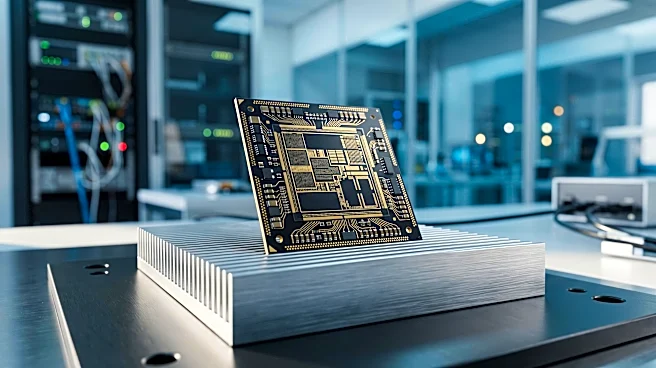
Nvidia’s approach to the AI revolution is to build the most powerful, flexible, and sought-after 'brain' on the market. Its graphics processing units (GPUs) are general-purpose accelerators, meaning they can handle a vast range of AI tasks for any customer,
from startups to the world's largest cloud providers. Think of it as the ultimate off-the-shelf engine for AI. The company sells a complete package: the hardware (like its Blackwell series GPUs) and the software that makes it run. This software, known as CUDA, is Nvidia's true competitive moat. Developed over two decades, it's a platform millions of developers have been trained on, and it's deeply integrated into every major AI framework. Switching away from CUDA means rewriting years of code, creating a powerful incentive for customers to stay within Nvidia’s ecosystem. This strategy has given Nvidia a dominant market share, estimated between 70% and 90% of the AI chip market in recent years.
Broadcom’s Strategy: Custom Silicon and Critical Connections
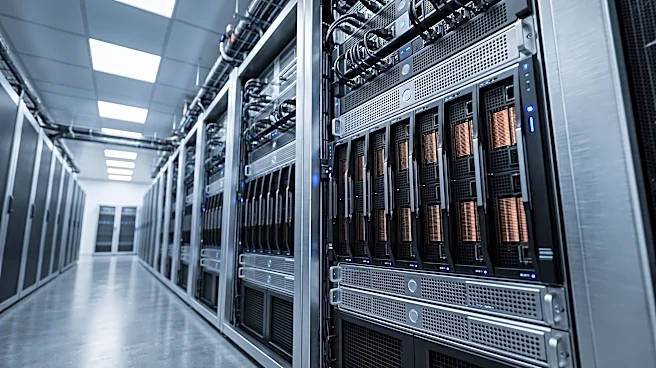
Broadcom is playing a different game entirely. Instead of selling a one-size-fits-all product, it has two main avenues for profiting from AI. The first is its custom silicon business, where it partners with tech giants like Google, Meta, and OpenAI to co-design application-specific integrated circuits (ASICs). These chips are tailor-made for a single customer's specific workloads, such as Google's Tensor Processing Units (TPUs). This approach offers potentially better cost and power efficiency for massive-scale operations, making it highly attractive to the biggest spenders in AI. Broadcom’s second advantage is its dominance in high-speed networking. An AI data center isn't just a collection of processors; it's a complex web of chips that must communicate at lightning speed. Broadcom makes the essential networking switches and components that act as the data center's nervous system, connecting thousands of GPUs or ASICs into a single, cohesive supercomputer. Whether the processors are from Nvidia, AMD, or custom-built, they all need Broadcom's networking gear to function as a large-scale AI cluster.
Different Customers, Different Risks
The two companies face distinct risks and opportunities based on their customer relationships. Nvidia sells to everyone, giving it broad market exposure. However, its dominance creates a powerful incentive for its largest customers to reduce their dependency by developing their own chips—often in partnership with Broadcom. Recent reports suggest that major AI labs are actively diversifying their future compute agreements away from Nvidia.Broadcom's custom chip business, on the other hand, relies on a handful of massive clients. These are deep, long-term partnerships that are difficult to displace, but customer concentration remains a risk. However, Broadcom’s business is more diversified overall. Its networking division profits from the entire industry's growth, and its large infrastructure software business, built around the acquisition of VMware, provides a stable, recurring revenue stream that the more cyclical semiconductor market doesn't.
The Investor’s Choice: The Front-Runner or The Foundation
For investors, the choice between Nvidia and Broadcom boils down to a strategic preference. An investment in Nvidia is a bet on its continued dominance as the premier, all-in-one AI platform. It’s a bet on the power of its CUDA software moat and its ability to keep producing the world’s most powerful general-purpose processors.An investment in Broadcom is a bet on the foundational expansion of AI infrastructure itself. It capitalizes on two trends: the desire of hyperscale companies to build their own optimized, cost-effective chips and the undeniable need for faster, more sophisticated networking to tie all the new compute power together. Broadcom's success isn't necessarily dependent on Nvidia's failure; the two can, and do, coexist. One sells the star quarterbacks, while the other sells the custom-designed offensive lines and the communication system for the entire team.