






The 'Before' Times: A World of Obvious Fakes
Not long ago, corporate cybersecurity training felt like a simple pattern-recognition test. Employees were taught to be digital detectives, and the clues were almost always the same. The annual PowerPoint for Cybersecurity Awareness Month instructed staff
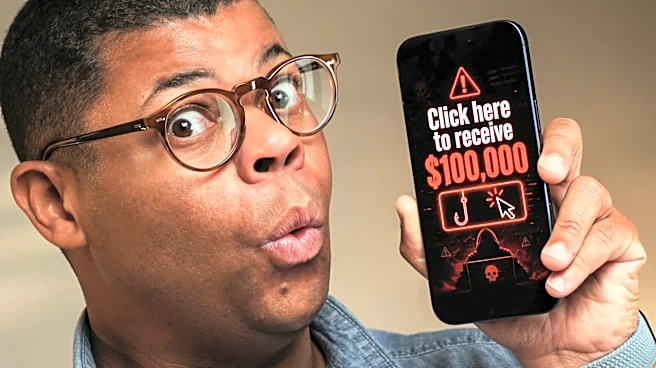
to hunt for the obvious red flags in a phishing email: glaring spelling mistakes, awkward grammar, and generic salutations like “Dear Valued Customer.”The advice was sound because it worked. High-volume phishing campaigns were often automated, translated poorly, and crafted by attackers who lacked fluency in their target’s language. An email claiming to be from the CEO but riddled with typos was easy to spot and report. The core lesson was that professionalism was a proxy for legitimacy. If a message felt “off” or amateurish, it was likely a scam. Training modules reinforced this by showing comical examples, and the employee’s job was to catch the technical flaws. For years, this was the standard defense, and it built a workforce conditioned to look for imperfection as the primary sign of an attack.
The Game Changer: When AI Learned to Write
The release of advanced generative AI models like ChatGPT marked a seismic shift in the threat landscape. Suddenly, the core assumption of cybersecurity training—that attackers make obvious mistakes—was no longer valid. Cybercriminals now have a tool that can instantly generate flawless, context-aware, and highly convincing text. The telltale signs of phishing have vanished. AI can write emails in the precise tone of a specific executive, reference internal projects, and adopt the communication style of a trusted vendor.This technology has changed the economics of deception. Previously, a highly personalized and well-written scam, known as spear phishing, required significant time and research. Now, an attacker can use AI to automate this process at a massive scale. They can create thousands of unique variations of a phishing email, each tailored to a specific individual or department, making them nearly impossible for traditional security filters to catch. The era of spotting bad grammar was officially over; the age of discerning perfect, malicious fakes had begun.
The 'After' Era: Training for a More Deceptive World
In the post-AI world, cybersecurity training has been forced to evolve from spotting mistakes to questioning authenticity. The new mantra for Cybersecurity Awareness Month is no longer just “awareness,” but “readiness” and “resilience.” Since employees can no longer rely on spotting errors, they must now build a habit of healthy skepticism toward all digital communications.The most critical new skill being taught is verification. Instead of just looking at an email, employees are now trained to verify unusual or urgent requests through a separate, trusted channel. If an email asks for a wire transfer or sensitive data, the new protocol is to pick up the phone, start a new chat in a corporate messaging app, or walk down the hall to confirm the request is real. Training has shifted from a technical focus to a behavioral one, emphasizing critical thinking over pattern matching. It’s a fundamental rewiring of workplace instincts, teaching employees that even a message that looks and sounds completely legitimate could be a sophisticated, AI-crafted lure.
Beyond Email: The Rise of Voice and Video Fakes
Just as employees are adapting to flawless phishing emails, the next wave of AI-driven threats is already here. Generative AI is not limited to text; it can also clone voices and create realistic deepfake videos. An attacker needs just a few seconds of audio from a public interview or company video to create a synthetic version of a person's voice. This has led to a surge in “vishing,” or voice phishing, where an employee might receive a seemingly legitimate but completely fake call from their “boss” or “CFO” asking for an urgent payment or password reset.As a result, modern cybersecurity training must now address multimedia threats. Companies are incorporating examples of deepfake audio and video into their awareness programs to show employees how convincing these fakes can be. The guidance remains the same: verify, verify, verify. A phone call demanding immediate action requires the same level of skepticism as an email. The defense is no longer about what you see or hear, but about the process you follow to confirm it is genuine.